
Wayne Gretzky Rookie Card: Complete Guide to Values, Population, and Market Trends
Last updated: July 2026.
 Only two copies exist at the highest grade. One reportedly sold in a private transaction in 2021. The other has not appeared at public auction in years.
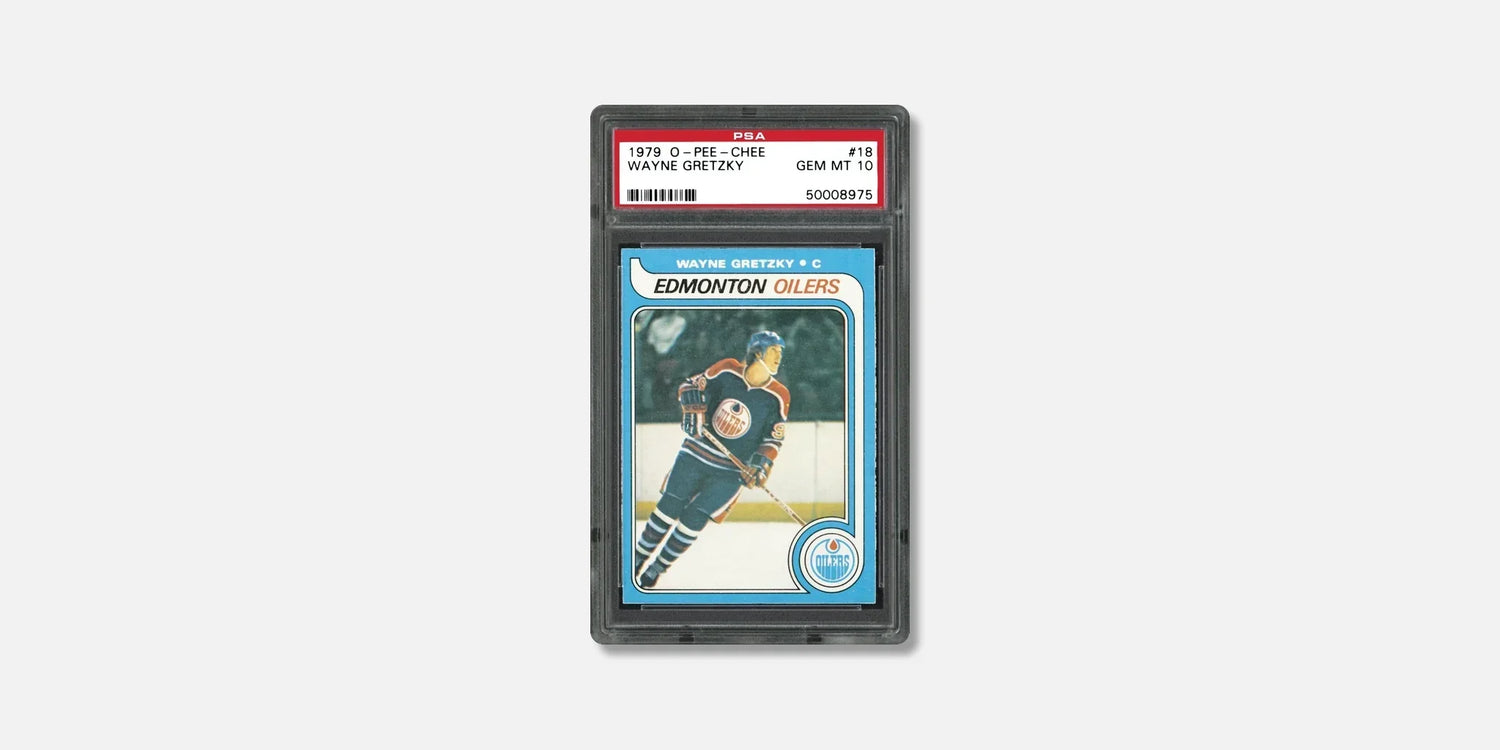
The Wayne Gretzky rookie card is not a single card. It is two distinct cards from the 1979-80 season, both numbered 18, both featuring the same image of a young Gretzky in an Edmonton Oilers jersey. One was manufactured by O-Pee-Chee in Canada. The other by Topps in the United States. They share an image but not a production history, a grading population, or a market value.
Collectors who own these cards—or are considering acquiring one—need current market data, population context, and an understanding of what separates the two versions. This is that reference.
Wayne Gretzky's Two Rookie Cards: O-Pee-Chee and Topps
Wayne Gretzky entered the NHL for the 1979-80 season. Both O-Pee-Chee and Topps issued cards featuring him that year. Both cards are card #18. Both use the same photograph. Both are recognized rookie cards.
The distinction matters because they were produced differently, grade differently, and trade at dramatically different price levels. A PSA 9 O-Pee-Chee trades for $106,750. A PSA 9 Topps trades for $24,001. Same grade, same player, different card.
1979-80 O-Pee-Chee #18 Wayne Gretzky
 The O-Pee-Chee Wayne Gretzky rookie is the more valuable of the two versions. O-Pee-Chee was a Canadian card manufacturer that licensed Topps images to produce parallel versions of Topps cards in Canada. O-Pee-Chee cards from the 1979-80 set were cut using a wire blade rather than a sharp metal blade, resulting in characteristically rough edges.
Wire cut is a manufacturing process where card sheets were cut using a wire rather than a blade, producing rough, ragged edges. Even cards pulled directly from packs and stored carefully exhibit edge roughness under magnification. This manufacturing method is why O-Pee-Chee cards rarely grade high.
According to the PSA Population Report, approximately 9% of PSA-graded O-Pee-Chee Gretzky rookies achieve PSA 8 or higher. That scarcity at high grades is baked into the production process, not a function of mishandling.
1979-80 Topps #18 Wayne Gretzky
 The Topps version uses the same image, same card number, and the same overall design. The primary difference is production quality. Topps manufactured cards in the United States using traditional blade-cutting methods, which produced cleaner edges. According to the PSA Population Report, approximately 18% of PSA-graded Topps Gretzky rookies achieve PSA 8 or higher—double the rate of O-Pee-Chee.
That production advantage makes the Topps version more common at high grades and correspondingly less valuable. A PSA 9 Topps Gretzky rookie trades at approximately 20% of the value of a PSA 9 O-Pee-Chee.
For collectors, the Topps version represents a more accessible entry point. The image is identical, and the player significance is the same. The price differential exists entirely because of manufacturing scarcity.
Why the O-Pee-Chee Version Commands a Premium
The value gap between O-Pee-Chee and Topps comes down to one number: 9% versus 18%.
When only 9% of submitted O-Pee-Chee cards grade PSA 8 or higher, high-grade examples are objectively scarce. Collectors competing for PSA 9 or PSA 10 examples face limited supply. Auction results reflect that scarcity. The Topps version, with an 18% success rate at PSA 8 or higher, faces no such constraint. More submissions yield more high-grade cards, which moderates prices.

Current Market Values by Grade
Values for Wayne Gretzky rookie cards have stabilized after the 2021 market peak and the correction that followed. Current pricing reflects sustained collector demand rather than speculative froth.
O-Pee-Chee Values: PSA 10 Through PSA 7
| Grade | Recent Sale Price | Sale Date | Population |
|---|---|---|---|
| PSA 10 | Private sale (reported) | 2021 | 2 |
| PSA 9 | $115,900 / $106,750 | March 2026 / February 2026 | 95* |
| PSA 8 | $15,250 | June 2025 | 359* |
| PSA 7 | $4,494 | June 2025 | 580* |
*Population figures per PSA Population Report, as of mid-2026. Populations below PSA 9 are subject to regular updates as new submissions are graded.
The PSA 10 figure represents the ceiling—private transaction details are not publicly disclosed. Only two PSA 10 examples exist, and one has not appeared at public auction in years. That level of scarcity makes the PSA 10 a theoretical reference point rather than a tradable market.
PSA 9 examples represent the practical top of the market. With 95 copies graded at this level per the PSA Population Report, PSA 9 O-Pee-Chee Gretzky rookies come to market regularly enough to establish consistent pricing. As of mid-2026, the most recent documented sales include a PSA 9 at $115,900 (March 2026) and $106,750 (February 2026)—40-50% below the early 2021 peak of $271,830, but still representing significant long-term appreciation from pre-pandemic levels.
PSA 8 examples represent the entry point for collectors seeking a high-grade Gretzky rookie at a more accessible price. The $15,250 level from June 2025 reflects genuine collector demand—these are not commodity cards, but they are within reach for serious collectors who cannot justify six figures for a PSA 9.
Topps Values: PSA 10 Through PSA 8
| Grade | Recent Sale Price | Sale Date | Population |
|---|---|---|---|
| PSA 9 | $24,001 | June 2025 | 118* |
| PSA 8 | $4,950 | June 2025 | 337* |
*Population figures per PSA Population Report, as of mid-2026. Note: Two PSA 10 Topps examples exist but have not appeared at public auction in recent years; private sale figures are not publicly disclosed and therefore not included in this reference table.
The Topps version trades at roughly 20% of O-Pee-Chee values at equivalent grades. A PSA 9 Topps at $24,001 versus a PSA 9 O-Pee-Chee at $106,750 is not an apples-to-apples comparison—these are fundamentally different scarcity profiles.
For collectors, the Topps version offers genuine access to a Gretzky rookie card at a fraction of the O-Pee-Chee cost. The card is authentic, the image is identical, and the player significance is the same.
Autographed Examples: The $540,000 PSA 9

A PSA 9 O-Pee-Chee Gretzky rookie with an authenticated in-person autograph graded PSA/DNA 10 Auto sold for $540,000 through Fanatics Collect in May 2026—the highest price ever paid for an autographed hockey card.
Authenticated autographs create a distinct premium tier. The May 2026 sale represents roughly 5x the value of an unsigned PSA 9 at current prices. That multiple reflects both the scarcity of authenticated in-person autographs on high-grade examples and collector demand for a card that combines condition, authenticity, and personal connection.
Not all autographed examples carry this premium. Authentication matters. A PSA/DNA or Beckett authentication grade provides third-party verification that the signature is genuine and was obtained in person or through a verified signing. Without that authentication, autographed cards carry significant risk.

Population and Scarcity: How Rare Are High-Grade Examples?
Scarcity at high grades is what makes the Wayne Gretzky rookie card valuable. Population data tells the story.
PSA Population Breakdown
According to the PSA Population Report, as of mid-2026:
- O-Pee-Chee PSA 10: 2 copies exist
- O-Pee-Chee PSA 9: 95 copies graded
- Topps PSA 10: 2 copies exist
Two PSA 10 examples is effectively zero supply. These cards rarely change hands. When they do, the transactions are private or occur through invitation-only auction formats. For collectors evaluating opportunities, the PSA 10 is a reference point, not a realistic acquisition target.
Ninety-five PSA 9 examples represents real but limited supply. Cards at this grade come to market regularly enough to establish pricing, but not so frequently that buyers have unlimited options. Auction competition for PSA 9 examples is consistent.
Why So Few O-Pee-Chee Cards Grade High
The wire-cut edge issue is structural, not cosmetic. O-Pee-Chee used a wire blade to cut card sheets, and that process produced rough, ragged edges even on cards that were never mishandled. Cards pulled directly from packs and stored carefully still exhibit edge roughness under magnification.
PSA evaluates edges as part of the grading process. Rough edges lower the grade. For most O-Pee-Chee cards from this era, edge quality alone prevents a grade above PSA 7 or PSA 8—even when centering, corners, and surface are strong.
The 9% figure—only 9% of submitted O-Pee-Chee Gretzky rookies achieve PSA 8 or higher per the PSA Population Report—is the manufacturing reality showing up in grading data.
Record Sales and Market History
The Wayne Gretzky rookie card market has moved through three distinct phases over the last seven years: pre-pandemic baseline, the 2021 speculative peak, and the current stabilized market.
The Private PSA 10 Sale: 2021
One of two PSA 10 O-Pee-Chee Wayne Gretzky rookies reportedly sold in a private transaction in 2021. The sale price reported in hobby media was $3.75 million, though this figure has not been independently verified through public auction records or authenticated transaction databases. This transaction occurred at the absolute peak of the pandemic-era card boom, when institutional money was entering the hobby and alternative asset narratives were driving speculative capital into trading cards.
Market Peak and Correction: 2021-2023
PSA 9 O-Pee-Chee examples hit $271,830 in early 2021. By mid-2022, as the broader trading card market corrected, values began falling. The correction continued through 2023 as speculative buyers exited and institutional interest cooled.
The 2021 peak was real—cards sold at those prices—but it was not sustainable. The buyer base at that price level was shallow. When sentiment shifted, bids disappeared quickly.
The correction was not unique to Gretzky. Virtually every high-end card experienced a similar pattern. The 1952 Topps Mickey Mantle, the T206 Honus Wagner, the 1986 Fleer Michael Jordan—all saw peak prices in 2021 followed by meaningful corrections.
Current Market: 2024-2026
Recent sales show stabilization. February and March 2026 saw PSA 9 O-Pee-Chee examples sell for $106,750 and $115,900. A June 2025 sale reached $138,470.
Current values sit 40-50% below the 2021 peak but remain significantly elevated relative to pre-pandemic levels. The card has appreciated significantly over the past seven years. A PSA 9 O-Pee-Chee that traded for approximately $25,000 in 2019 now trades for four to five times that amount, reflecting sustained collector demand through multiple market cycles. A PSA 8 O-Pee-Chee at $15,250 in 2025 represents a 321% increase from 2019 levels of approximately $3,600.
Demand now comes primarily from serious collectors and long-term investors who view the card as a blue-chip collectible rather than a short-term speculation.
Authentication and Counterfeits: What Collectors Need to Know
Counterfeit Gretzky rookies are a documented market problem. High-value cards attract counterfeiting efforts, and the Gretzky rookie—with its relatively simple design and significant price point—has been targeted.
For collectors buying or selling a Wayne Gretzky rookie card at any price above $1,000, third-party grading by PSA, Beckett, or SGC is essential. Grading companies authenticate cards as part of the grading process. A card encapsulated in a PSA or BGS holder has been examined, verified, and sealed in a tamper-evident case.
Raw high-value cards carry significant authentication risk. A seller offering a raw O-Pee-Chee Gretzky rookie at a price that appears attractive relative to graded comps is a red flag. Without third-party authentication, there is no reliable way for most collectors to verify authenticity.
If you own a raw Gretzky rookie and are considering grading it, confirm that the card was obtained from a verifiable source—a reputable dealer, a documented estate, or a collection with known provenance. Cards acquired from unknown sellers or online marketplaces without authentication guarantees should be approached with caution.
Grading is not expensive relative to the card's value. PSA grading fees for a card in this value range are a fraction of what the card is worth. The protection that grading provides—both authentication and encapsulation—justifies the cost for any card a collector intends to keep or sell.

Protecting and Displaying a Graded Gretzky Rookie
A PSA 9 O-Pee-Chee Gretzky rookie is worth more than most cars. A PSA 10 is worth more than most houses. Even a PSA 7 represents a significant financial and collectible asset. Cards at this value level deserve storage and display solutions that match their importance.
Graded slabs should not be treated as dedicated UV-protective storage. A graded slab protects the card from handling and environmental contact—UV-protective storage adds a layer of protection the slab itself isn't designed to provide. Even with a graded slab, long-term UV exposure remains a consideration.
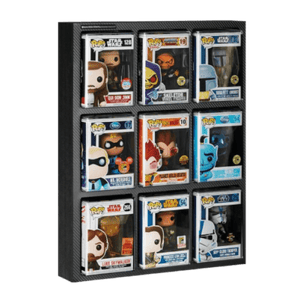
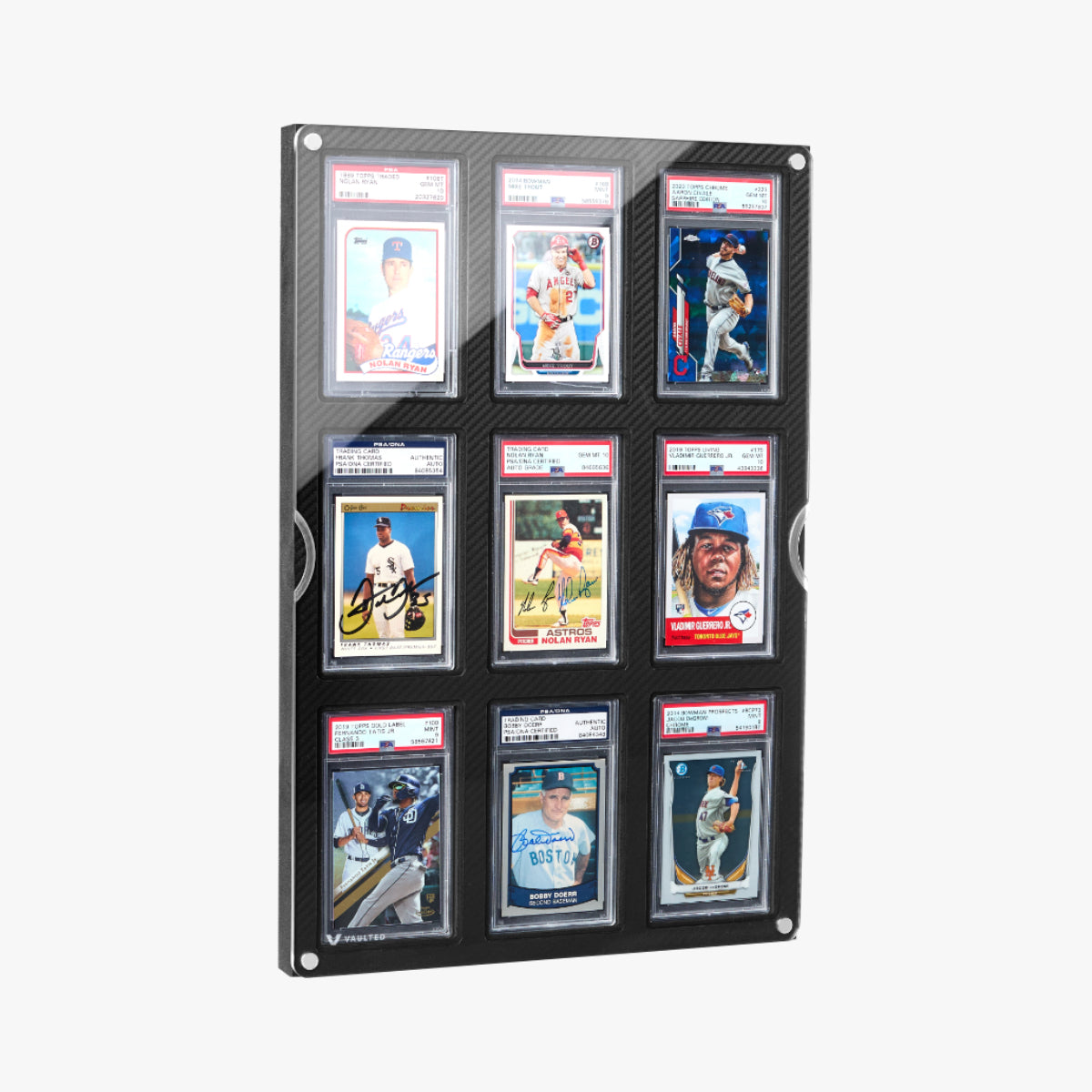
For collectors displaying a Gretzky rookie, a UV-protective display designed for PSA graded cards provides wall-mountable presentation with built-in UV protection. The polycarbonate window helps block harmful UV light while allowing the card to be showcased.
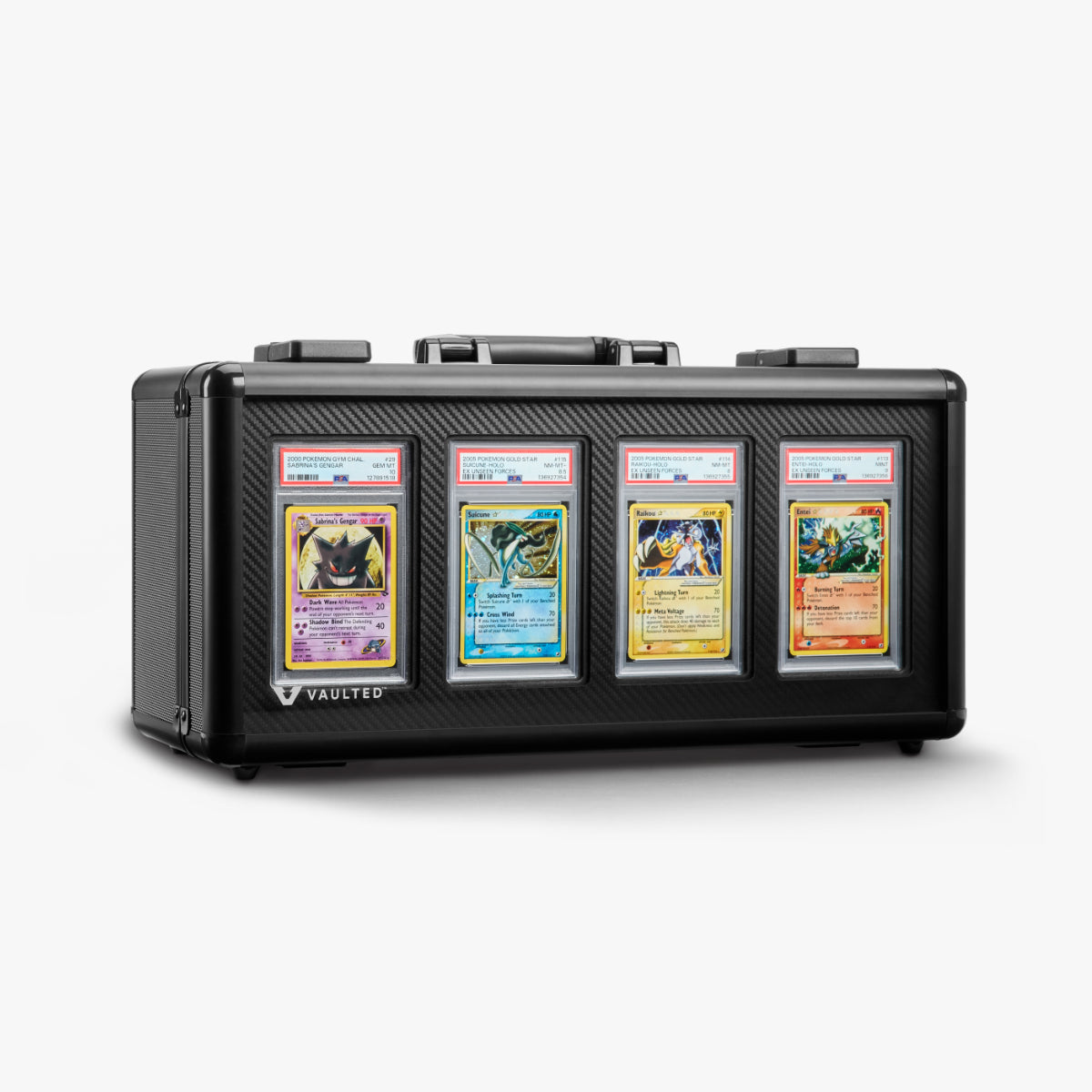
For collectors storing rather than displaying, secure storage with UV protection is the priority. The Card Case (4-Row) provides organized internal storage for up to 112 PSA slabs with fully enclosed protection for cards in internal rows. High-value cards stored in a case belong in internal storage, not in a display window—security and protection take precedence over visibility.
Regardless of storage method, the goal is the same: minimize UV exposure, control temperature and humidity where practical, and ensure the card remains in its current condition for as long as it is owned.
Should You Buy a Gretzky Rookie Card in 2026?
PSA 9 O-Pee-Chee examples are accessible at current prices—$106,000 to $138,000 is expensive, but it is no longer record-breaking. A collector with serious intent and the financial capacity can acquire a PSA 9 Gretzky rookie today without competing against speculative capital or institutional buyers driving prices beyond collector fundamentals.
Collectors have noted that PSA 9 examples come to market regularly. Buyers exist at current price levels. This is not a card that struggles to find a bid when offered at auction.
The counterargument is straightforward: the card is expensive, and there is no guarantee that values will continue to appreciate. The 2021 peak and the correction that followed demonstrate that card values can fall—and fall quickly—when sentiment shifts. A collector buying a $110,000 card today is taking on risk.
But the baseline remains: this is one of the most iconic cards in the hobby, issued in the rookie year of the player widely regarded as the greatest to ever play the sport. The O-Pee-Chee version is objectively scarce at high grades. Population data from the PSA Population Report supports the value. Auction history shows sustained demand.
Frequently Asked Questions
How many PSA 10 Wayne Gretzky rookie cards exist?
According to the PSA Population Report, two PSA 10 O-Pee-Chee examples exist, and two PSA 10 Topps examples exist. One O-Pee-Chee PSA 10 reportedly sold in a private transaction in 2021, with a sale price of $3.75 million reported in hobby media, though this figure has not been independently verified through public auction records. PSA 10 Topps examples have not appeared at public auction in recent years. The other examples have not appeared at public auction in recent years.
What is the difference between O-Pee-Chee and Topps Gretzky rookies?
Both are 1979-80 #18 cards with the same image. O-Pee-Chee cards were manufactured in Canada using a wire blade to cut card sheets, resulting in characteristically rough edges that make high-grade examples statistically rare. Topps cards have cleaner edges and are more common in high grades, making them less valuable. O-Pee-Chee PSA 9 examples trade at roughly five times the value of Topps PSA 9 examples.
Why did Gretzky rookie card values drop after 2021?
The broader trading card market experienced a speculative peak in 2021-2022 driven by pandemic-era collecting activity, institutional investment, and alternative asset narratives. As conditions normalized, values corrected 40-50% from peak levels. Current prices reflect sustained collector demand rather than speculative buying. The correction was not unique to Gretzky—virtually all high-end cards experienced similar patterns.
Is a raw Wayne Gretzky rookie card worth grading?
If the card appears to be in excellent condition with sharp corners, clean edges, and good centering, grading by PSA is worth considering. Even a PSA 7 O-Pee-Chee is worth approximately $4,494. However, authentication risk is significant for raw high-value cards—only grade cards obtained from verifiable sources. Counterfeit Gretzky rookies are a documented market problem.
What is the most expensive Wayne Gretzky card ever sold?
A PSA 10 1979-80 O-Pee-Chee Wayne Gretzky rookie card reportedly sold in a private transaction in 2021 for $3.75 million, as reported in hobby media, though this figure has not been independently verified through public auction records. The highest verified public auction sale for a PSA 9 O-Pee-Chee example was $271,830 in early 2021.
How does the O-Pee-Chee Gretzky rookie compare to other vintage hockey cards?
The O-Pee-Chee Gretzky rookie is widely regarded as the most significant hockey card ever produced. No other hockey card commands comparable prices at equivalent grades. The combination of player significance, documented scarcity at high grades per the PSA Population Report, and sustained collector demand places it in a category by itself within hockey collecting.
Can I display a Gretzky rookie card without damaging it?
Yes, with appropriate UV protection. Graded slabs provide handling and environmental protection but should not be treated as permanent UV-protective storage. For display, use a UV-protective wall mount designed for graded cards. For storage, keep the card in a fully enclosed environment away from direct light sources. Minimize UV exposure regardless of whether the card is displayed or stored.
For most collectors, owning a Wayne Gretzky rookie card was never the goal. Owning one of the cards that defines the sport was. That is what these cards represent—not just cardboard, but the moment when the greatest player to ever play the game entered the NHL. Collectors who understand that do not buy these cards for the resale value. They buy them because some things are worth keeping.