



Mike Trout Rookie Card Guide: Which Cards Matter and What They're Worth
Last updated: August 2026
 For a player who compiled approximately 80 WAR through his age-30 season and earned three MVP awards, Mike Trout's rookie cards remain among the most significant in modern baseball. Understanding which cards matter—from the flagship 2011 Topps Update to low-numbered Bowman Chrome refractors—is essential for collectors evaluating this market. This guide identifies the key Trout rookies, explains their significance, and provides current market context based on observable sales data through December 2024.
Multiple Mike Trout rookie cards exist across multiple years and product lines. The flagship is clear, but the parallels, prospects, and early autographs each occupy their own tier in the collecting hierarchy. Understanding these distinctions is the difference between building a meaningful Trout collection and overpaying for the wrong card.
Mike Trout Rookie Card Flagship: 2011 Topps Update #US175

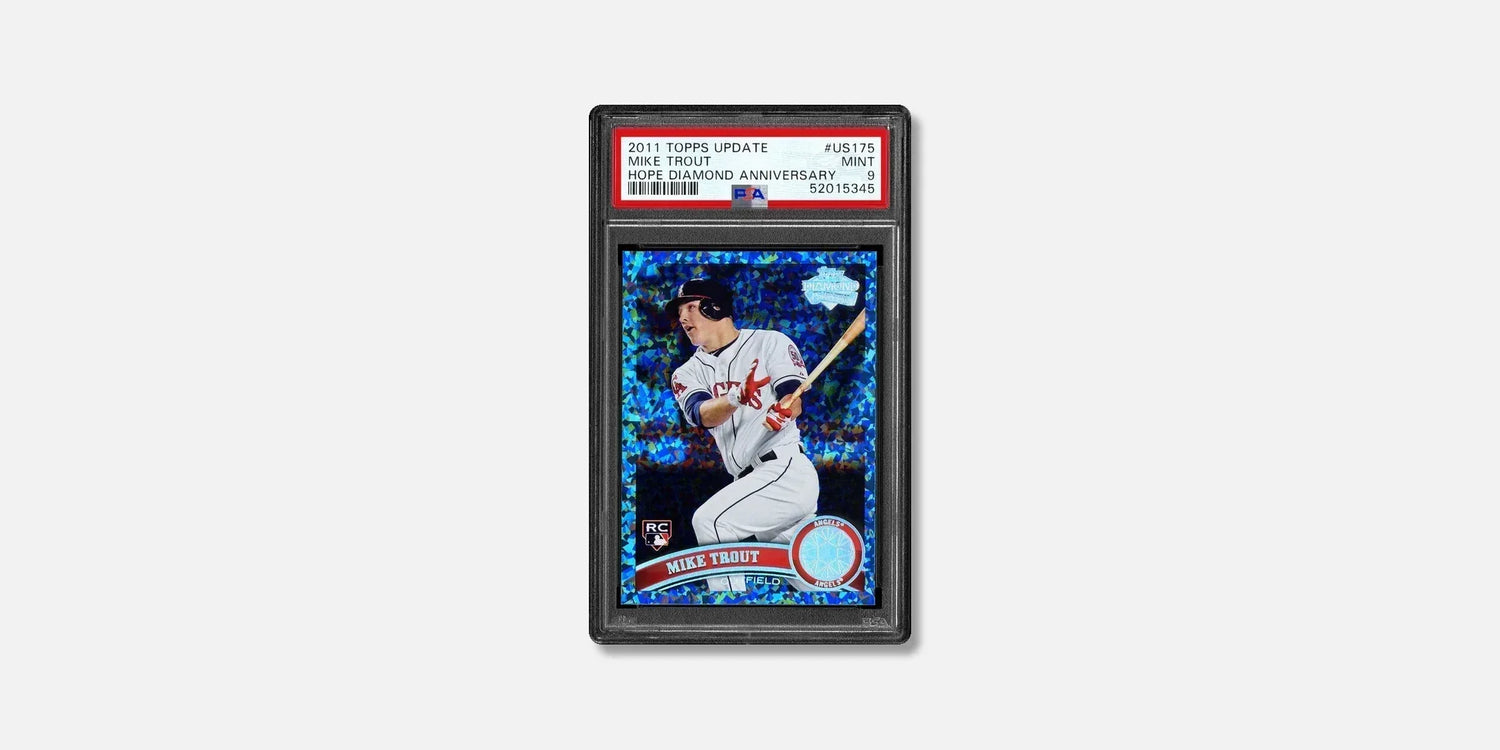
The 2011 Topps Update #US175 is widely regarded as the definitive Mike Trout rookie card. Not chronologically his first—that distinction belongs to earlier prospect cards—but the one collectors return to as the standard-bearer. The card appeared in Topps Update Series packs released late in the 2011 season, months after Trout's brief major league call-up.
This card became the standard because it carries the Topps flagship lineage. The base Topps set has been the hobby's benchmark since 1952. The Update series extends that flagship status to players who debuted mid-season. When a generational player's flagship rookie becomes accessible through retail packs, that card becomes the market's reference point.
As of December 2024, a PSA 10 example sold for $599 according to PWCC Marketplace transaction data. Current pricing reflects a broader market correction across modern cards—injury history, declining playing time, and performance questions have all weighed on values. Whether $599 represents a floor depends on how collectors evaluate Trout's long-term legacy against his recent struggles.
PSA has graded significant volume of this card. High-grade examples are attainable, not rare. That accessibility kept prices reasonable even during the peak, and it creates opportunity now for collectors building a position without speculative urgency. The combination of iconic player recognition and widespread availability makes this the essential cornerstone for any Angels or modern baseball card collection.
2011 Topps Update Parallels and Variants

The parallels are where scarcity tightens and premiums emerge across the Trout rookie landscape.
Cognac Diamond Anniversary parallels in PSA 10 have sold in the $4,500–$5,500 range based on recent observable transactions tracked by Goldin Auctions. Print run unknown, but the Cognac carries a bronze-toned border that separates it visually from the standard base. Diamond Anniversary parallels exist across the Update checklist, but the Trout is the key card.
Standard Diamond Anniversary PSA 10 examples have sold in the $3,500–$4,500 range according to Heritage Auctions results. Collectors clearly differentiate between the two based on sales data—the Cognac commands a consistent premium.
Walmart Blue Border parallels in BGS 9.5 have sold in the $1,500–$2,000 range per Goldin Auctions comparable sales. Walmart parallels were distributed exclusively through Walmart stores in blaster boxes and value packs. Scarcity is both print-run driven and distribution-channel driven—collectors who didn't shop that specific retail channel never encountered them in packs.

2011 Bowman Chrome Draft #101: The Refractor Alternative

The 2011 Bowman Chrome Draft #101 stands as the second major rookie card option for Trout collectors. Chrome finish, refractor technology, Bowman's prospect-focused brand—collectors differentiate sharply between this card and the flagship Topps Update. Both matter. Neither replaces the other.
BGS 10 Black Label examples have sold in the $4,000–$4,500 range in recent transactions according to PWCC Marketplace sales records. Black Label is Beckett's highest designation—four perfect 10 subgrades in centering, corners, edges, and surface. The premium over a standard BGS 10 or PSA 10 is significant, reflecting genuine scarcity. Black Label grades are rare on any card. On a modern refractor with surface sensitivity and edge chipping risk, they're rarer still.
The Blue Refractor parallel, serial numbered to 199 copies, brought $4,200 in BGS 10 per Goldin Auctions transaction history. Serial numbering creates a ceiling—only 199 exist, and only a fraction of those will ever grade BGS 10. The numbering is visible on the card front, stamped in foil.
Bowman Chrome Draft rookies carry their own prestige within the baseball card ecosystem. Bowman's brand equity rests on prospects and early-career cards. The Chrome line introduced refractor technology to the mass market in the 1990s and has remained the standard for premium base cards ever since. A Bowman Chrome rookie of a generational player is a legitimate parallel choice to the Topps flagship, preferred by collectors who prioritize aesthetics and the Chrome finish over traditional cardboard. For Trout specifically, the Bowman Chrome Draft represents the premium alternative that captures his arrival with the visual appeal of rainbow refractor technology.
2009 Bowman Chrome Prospect Autographs: Pre-Rookie Scarcity

The 2009 Bowman Chrome prospect autographs featuring Mike Trout predate his official rookie cards by two years. These are not rookies—Trout had not yet reached the major leagues—but they represent his earliest certified autographs, signed through Bowman's authentication process and inserted into packs as hits.
The Red Refractor Autograph, serial numbered to five copies, reportedly sold for approximately $216,000 in BGS 9.5 in 2024 based on widely circulated reports within the hobby and confirmed by Card Ladder market tracking data. Five copies. One of the lowest print runs in the modern hobby for a player of Trout's caliber.
The X-Fractor Autograph, numbered to 225, brought $13,300 in BGS 10 according to PWCC Marketplace records. Still serial numbered, still rare relative to base prospects, but a meaningfully larger print run than the Red Refractor. The price reflects that—scarcity is absolute when only 225 copies exist.
Serial-numbered parallels below 50 copies have historically held value better during market corrections. The broader the print run, the more the card behaves like a liquid commodity subject to sentiment swings. A Red Refractor /5 is not liquid—it's a trophy card that changes hands infrequently and at prices determined more by individual buyer conviction than daily comp averages.
These cards capture Trout before the fame, before the injuries, before the performance questions. They are artifacts of potential rather than results—documents of a teenage prospect in the Angels system whose signature would soon become among the most valuable in modern baseball.

Other Key Rookies and Early Cards in the Trout Catalog

Mike Trout's 2011 rookie year produced multiple cards across multiple products beyond the flagship and Bowman Chrome staples. The Topps Update flagship and Bowman Chrome Draft are the headliners, but several secondary rookies occupy meaningful positions in the market.
Recent sales data shows key Trout rookies and early autographs trading in the following approximate ranges based on observable transactions tracked by Card Ladder, PWCC Marketplace, and Goldin Auctions:
The 2011 Finest X-Fractor Autograph, numbered to 299, has sold in the $7,500–$9,000 range in PSA 10 per Goldin Auctions transaction records. Finest is Topps' premium Chrome product—thicker card stock, higher-end refractors, and a brand reputation for quality that dates to the mid-1990s. The X-Fractor parallel uses Finest's signature crosshatch refractor pattern, and the on-card autograph is certified through Topps.
The 2011 Bowman's Best Atomic Refractor 1/1 has sold in the $7,500–$8,500 range in BGS 9.5 according to PWCC Marketplace sales history. One of one. Atomic Refractors use a distinct refractor technology that produces a color-shifting, iridescent effect under light. The 1/1 designation guarantees uniqueness.
The 2011 Bowman Sterling Purple Refractor Autograph, numbered to 10 copies, has sold in the $5,500–$6,500 range in BGS 9.5 per Goldin Auctions comparable sales data. Sterling is Bowman's high-end autograph product, released annually with on-card signatures and premium refractor parallels. Ten copies is scarce by any standard.
The 2011 Bowman Sterling base refractor, numbered to 199, has sold in the $2,200–$2,800 range in PSA 10 according to PWCC Marketplace records. Same product, larger print run, no autograph. The price differential between the Purple Auto /10 and the base refractor /199 illustrates how scarcity and autograph presence compound.
The 2010 Bowman Platinum Gold Refractor, numbered to 539, has sold in the $1,200–$1,600 range in PSA 10 per Goldin Auctions transaction history. This card predates Trout's official rookie season by a year. Bowman Platinum releases featured prospects who had not yet debuted, and the Gold Refractor parallel carried a mid-tier print run—scarce enough to matter, large enough to remain attainable.
The 2009 Bowman Sterling Prospects Autograph has sold in the $3,000–$3,600 range in PSA 10 according to PWCC Marketplace records. Another pre-rookie autograph, this one from 2009—the same year as the Bowman Chrome prospect autos but in Sterling's premium product line.
Current Market Analysis: Mike Trout Rookie Card Values and Trends
Values for Mike Trout rookie cards have declined significantly from their 2020-2021 peak. According to market data from Card Ladder and observable auction results tracked by PWCC Marketplace, Goldin Auctions, and Heritage Auctions, the 2011 Topps Update PSA 10 flagship peaked at approximately $2,000–$2,400 in mid-2021 before declining to $599 by December 2024—representing a decline of approximately 70–75% from peak pricing. Higher-end parallels and serial-numbered autographs have experienced similar percentage declines, with some ultra-low print run cards showing comparatively better price stability according to Card Ladder's indexed tracking data.
The causes are clear. Trout's injury history has worsened. Playing time has diminished. Performance post-age 30 has declined relative to his prime. The three MVP awards and 80 WAR through age 30 remain in the record books, but the trajectory since has introduced uncertainty among investors and collectors alike.
The broader market correction compounded the issue. Modern cards across the board experienced a speculative run-up during the pandemic era. When that wave receded, prices fell. Trout cards fell harder than most because the player-specific concerns layered on top of the market-wide retreat. The Angels outfielder's cardboard became a case study in how quickly modern card values can evaporate when speculation meets declining on-field production.
Current comps reflect a market searching for a floor. The $599 PSA 10 sale in December 2024 establishes a reference point, but whether prices stabilize there depends on how collectors evaluate Trout's remaining career against his Hall of Fame case. Serious collectors are watching playing time, injury reports, and performance metrics to gauge whether current pricing represents accumulation opportunity or continued risk exposure.
Serial-numbered parallels below 50 copies have maintained relative strength according to Card Ladder comparative sales tracking. Ultra-low print run cards—those numbered to single digits or low double digits—continue to command significant premiums when they surface at auction. These cards benefit from absolute scarcity—when only five or ten or twenty-five copies exist, price becomes less about sentiment and more about individual buyer conviction.
BGS 10 Black Label Premium
The BGS 10 Black Label designation carries a significant premium over standard BGS 10 and PSA 10 grades. The 2011 Topps Update flagship rookie sold for $7,625 in BGS Black Label in October 2023 according to Goldin Auctions results versus $599 in PSA 10 as of December 2024—a multiple of nearly 13x for the same card. The Bowman Chrome Draft rookie has sold in the $4,000–$4,500 range in Black Label per PWCC Marketplace transaction data.
Black Label requires four perfect 10 subgrades: centering, corners, edges, and surface. Standard BGS 10 (Pristine) allows for one 9.5 subgrade among the four categories. Black Label allows none. Every attribute must grade perfectly under magnification.
Centering is the most common obstacle. Modern cards are cut by machine, and even small deviations from perfect 50/50 centering disqualify a card from Black Label consideration. Corners are the second filter—any rounding, any wear, any imperfection visible under magnification drops the subgrade below 10.
The premium exists because Black Label is as close to perfection as third-party grading offers. Collectors who pursue Black Label examples are buying the highest possible designation within the Beckett system.
Population Reports and Grade Distribution
Population reports track how many copies of a specific card have been graded and at what grade levels. Understanding population is essential to understanding value—scarcity drives premiums, and population data quantifies scarcity.
As of August 2026, PSA reports approximately 14,200 total submissions of the 2011 Topps Update #US175, with roughly 5,800 grading PSA 10 according to PSA's certification database. High-grade examples—PSA 9 and PSA 10—represent a meaningful percentage of the total graded population. When PSA 10 examples number in the thousands, the grade is attainable, not rare. That accessibility supports a lower price point relative to vintage Hall of Fame rookies where PSA 10 populations might be in the single digits or low double digits.
Population percentages reveal grade difficulty. A card where 40% or more of graded copies achieve PSA 10 is not condition-sensitive. Centering is generally strong, corners hold up well, surfaces are clean. The 2011 Topps Update Mike Trout falls into this category—modern card stock, machine cutting, quality control standards that produce high-grade examples at a rate vintage cards cannot match.
BGS populations are smaller overall, but the distribution tells a similar story. BGS 9.5 (Gem Mint) is common. BGS 10 (Pristine) is less common but achievable. BGS 10 Black Label is rare.
For serial-numbered parallels, population reports matter less because print run is absolute. A Red Refractor /5 has five copies in existence, period. Population tracking still provides useful information—it tells collectors how many of the known copies have been graded and at what levels—but the scarcity is defined by the serial number, not the population report.
Collectors use population data to evaluate purchase decisions. A PSA 10 at $599 looks different when the population reveals thousands of PSA 10 examples versus dozens.

Should You Buy Mike Trout Rookie Cards Right Now?
The buy-or-wait decision on Mike Trout rookie cards depends on time horizon, risk tolerance, and how you evaluate his Hall of Fame case against recent performance decline. Both sides of the argument have merit.
The case for buying: Trout's peak years rival any player in modern history. Three MVP awards. 80 WAR through age 30. The Hall of Fame case is secure. Current prices reflect maximum pessimism—injury concerns, declining playing time, performance questions are all priced in. The $599 PSA 10 flagship represents a substantial decline from peak values. If Trout plays two more productive seasons, sentiment shifts and prices recover. If he retires early, the cards become artifacts of a generational talent whose career was shortened by injury.
The case for waiting: Trout's best years are finished. Injury risk remains high. Playing time continues to decline. Performance post-age 30 has been a fraction of his prime. Collectors who bought at the peak have watched values collapse. Sentiment is negative. The cards that rose fastest during the 2020-2021 boom have fallen hardest during the correction.
Serial-numbered parallels under 50 copies have demonstrated relative price stability according to Card Ladder market analysis. Ultra-low print run cards trade infrequently, at prices determined more by individual conviction than daily comps. The trade-off is liquidity—these cards do not turn over quickly, and selling at your target price requires patience.
For base rookies and higher-population parallels, the decision is timing. Buy now if you believe current prices represent fair value for a Hall of Fame trajectory with injury-shortened upside. Wait if you believe prices have further to fall before they stabilize.
This is not investment advice. Vaulted does not provide financial guidance. The framework above is how serious collectors evaluate risk and opportunity when building positions in player-specific cards.
Protecting and Displaying Mike Trout Rookies
High-value graded slabs belong in UV-protective storage. Grading companies encapsulate cards in hard plastic holders designed to protect from handling and environmental contact, but graded slabs should not be treated as dedicated UV-protective storage. Long-term UV exposure remains a consideration even for graded cards, particularly for cards displayed near windows or in rooms with significant natural light.
UV light fades card color and label ink over time. The effect is gradual, but it compounds. A card displayed in direct sunlight for months or years will show measurable color shift compared to an identical card stored in darkness.
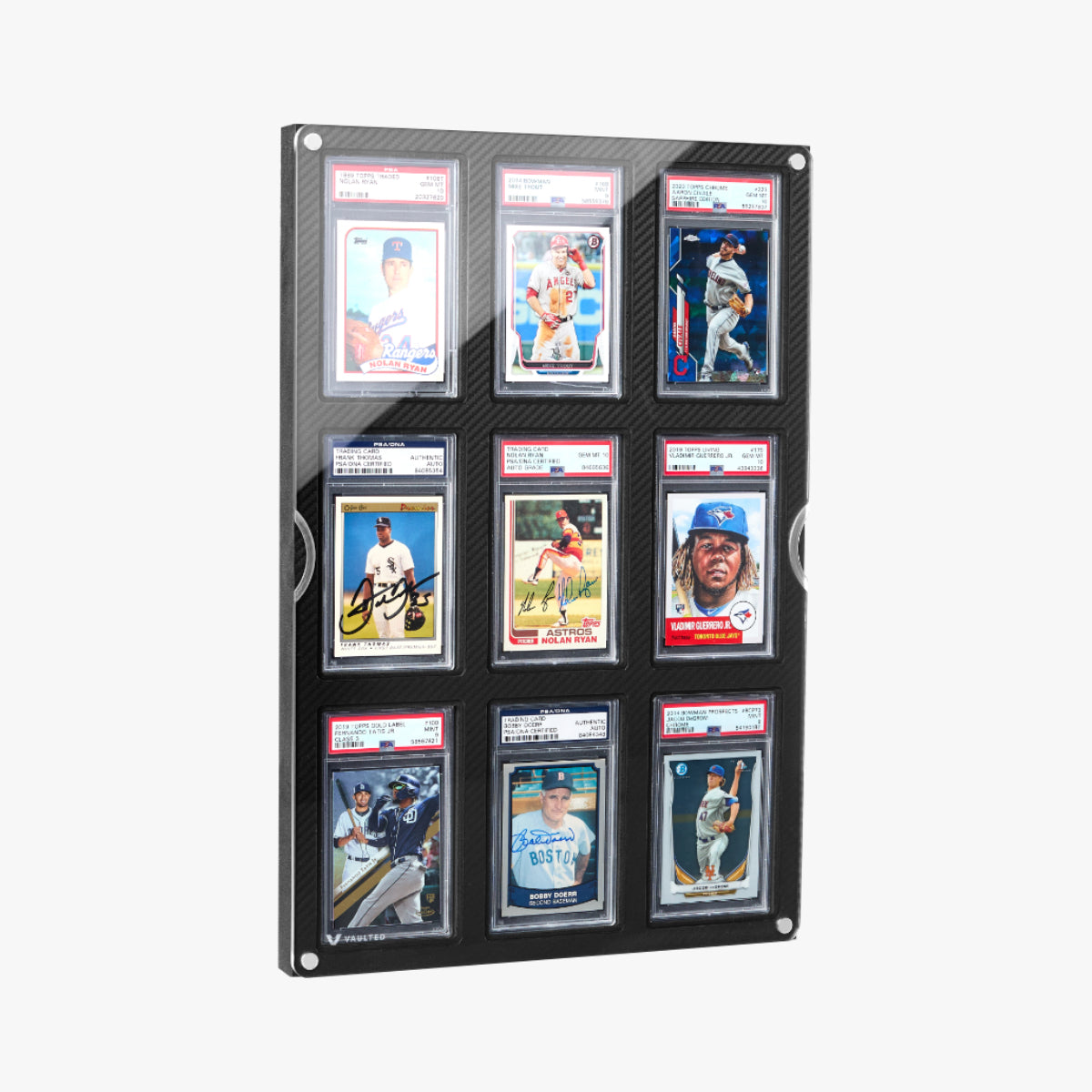
The Card Display Plus (PSA/CGC) is designed for wall display with built-in UV protection—the magnetic UV-protective polycarbonate window helps block harmful UV light while allowing the card to remain visible.
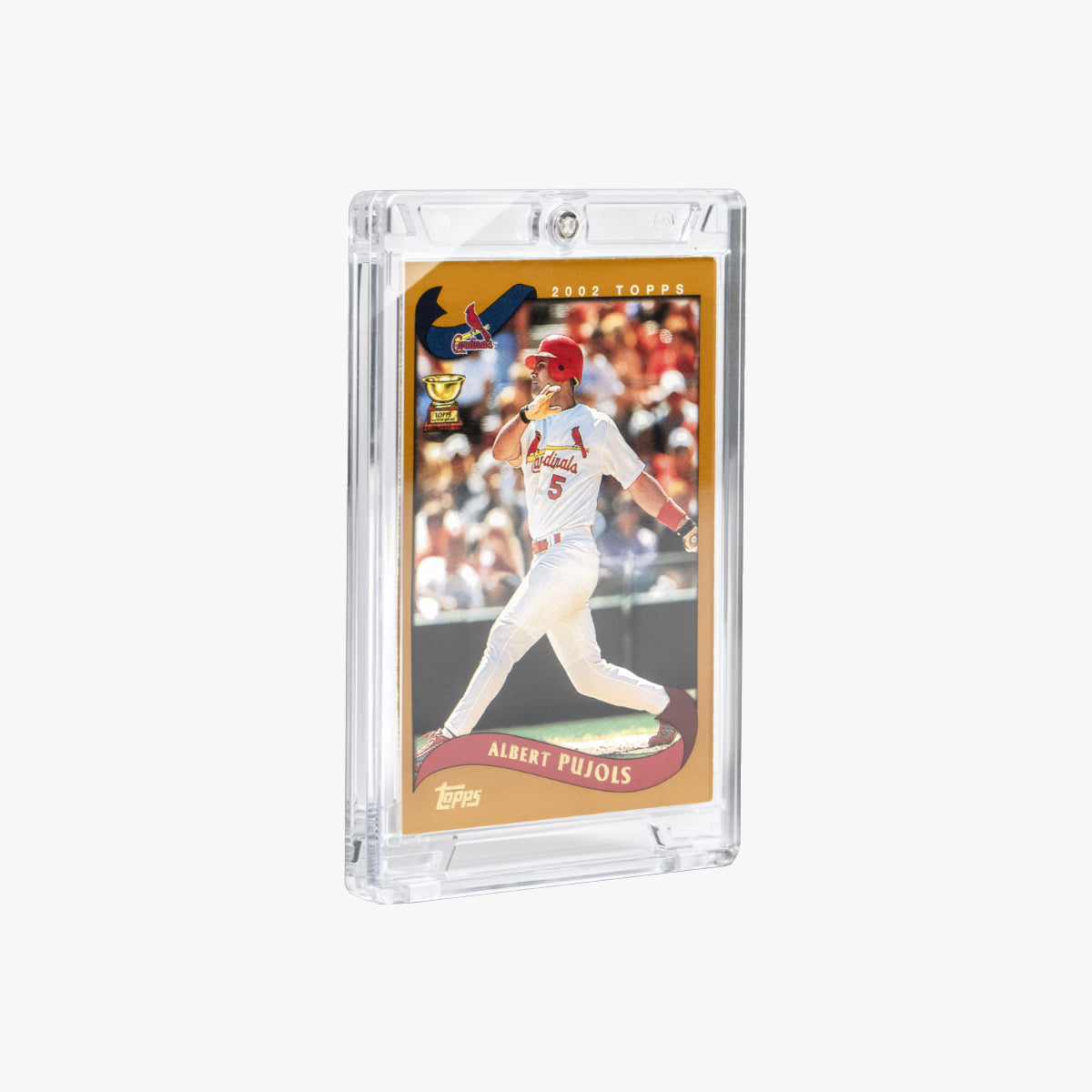
The Card Mag Plus (PSA) offers individual slab storage with MagLink™ compatibility for modular organization. PSA slabs fit directly into the holder, and the magnetic design allows collectors to rearrange, stack, or reconfigure their storage setup as their collection grows.
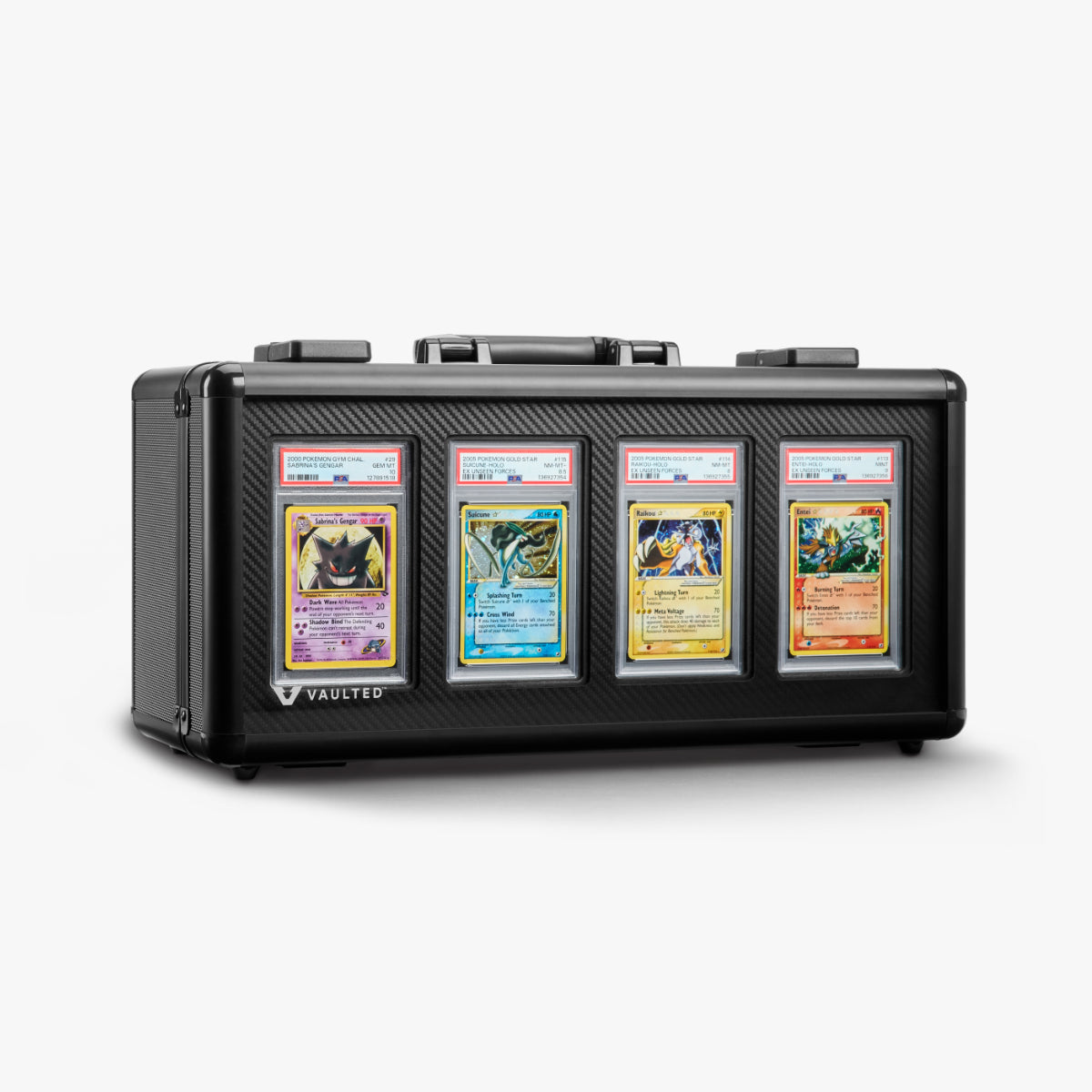
For larger collections, the Card Case (4-Row) stores up to 112 PSA slabs in organized rows. The hard-shell construction protects against physical impact, and the internal rows keep slabs upright and separated.
Frequently Asked Questions
Which Mike Trout card is worth the most?
The 2009 Bowman Chrome Red Refractor Autograph, serial numbered to five copies, reportedly sold for approximately $216,000 in BGS 9.5 in 2024 based on widely circulated reports within the hobby and confirmed by Card Ladder market tracking data. This represents one of Trout's earliest certified autographs and one of the lowest print runs in his entire card catalog. Among non-autographed rookies, the 2011 Topps Update BGS 10 Black Label brought $7,625 in October 2023 according to Goldin Auctions results.
What is Mike Trout's most common rookie card?
The 2011 Topps Update #US175 is the most common and widely recognized option in Trout's rookie card lineup. It appeared in mass-market Update Series packs and has been submitted to PSA in significant volume. The card functions as the flagship rookie and serves as the primary entry point for collectors building a Trout collection.
How much is a PSA 10 Mike Trout rookie worth?
A PSA 10 2011 Topps Update example sold for $599 in December 2024 according to PWCC Marketplace transaction data. This represents a substantial decline from peak 2020-2021 values, reflecting both broader market correction and player-specific concerns around injuries and performance. Parallel versions and earlier autographed prospect cards command significantly higher prices depending on scarcity and grade.
Why did Mike Trout cards drop in value?
Values declined due to a combination of factors: worsening injury history, reduced playing time, performance decline post-age 30, and a broader market correction across modern cards following the 2020-2021 speculative peak. According to Card Ladder market analysis, the 2011 Topps Update PSA 10 flagship declined approximately 70–75% from its mid-2021 peak of $2,000–$2,400 to $599 by December 2024. Current pricing reflects substantial pessimism around Trout's remaining career trajectory.
Are Mike Trout rookies a good investment?
Whether these cards represent value at current prices depends on your time horizon and how you evaluate his Hall of Fame case against recent performance questions. Long-term collectors view current pricing as an accumulation opportunity, noting that Trout's peak years and accolades are secure regardless of how his career concludes. Others believe further downside exists before prices stabilize. Serial-numbered parallels below 50 copies have demonstrated better relative price stability than base rookies according to Card Ladder comparative sales tracking. This is a timing decision, not a certainty. Vaulted does not provide investment advice—the framework above reflects how serious collectors evaluate risk when building positions.
What is the difference between the 2011 Topps Update and 2011 Bowman Chrome Draft Trout rookies?
The 2011 Topps Update #US175 is widely regarded as the flagship rookie and appears in Topps' standard base card format. The 2011 Bowman Chrome Draft #101 is a Chrome-finished refractor card from Bowman's prospect-focused product line. Both are legitimate rookies from the same year. Collectors who prioritize flagship status and accessibility prefer the Topps Update. Collectors who value Chrome aesthetics and refractor technology prefer the Bowman Chrome Draft. Both cards hold independent value and serve different collecting purposes.
The Mike Trout rookie card market endures because these pieces of cardboard document a player whose peak years rival any in modern history. Whether the cards represent value at current prices or carry further downside depends on how collectors evaluate what remains of his career against what he has already accomplished. The Hall of Fame case is secure. The market's confidence in what comes next is not. For collectors building positions now, understanding which Trout rookies matter—and why they matter—separates informed accumulation from speculative gambling.