


The Ultimate Collector Guide to Legendary Yu-Gi-Oh! Cards
The world of rare yugioh cards has evolved far beyond childhood binders and playground trades. In 2026, serious collectors treat high-end Yu-Gi-Oh! the same way others treat vintage comics, sports memorabilia, or fine art. Trophy cards, early OCG relics, and legendary promos now dominate auction houses, private deals, and curated collections, with prices that regularly rival luxury watches. Whether you’re chasing the most rare yugioh cards, researching rare yugioh cards worth money, or simply refining your grail list, understanding what truly drives value has never been more important.
This guide is written for collectors who already know the basics of yugioh cards, but want deeper insight—historical context, scarcity mechanics, and why certain pieces have transcended the game itself. From rare yugioh cards 1996 era myths to modern trophy legends, this is your updated 2026 snapshot of the hobby’s elite tier.

What Makes a Yugioh Card Rare and Valuable?
Not all yugioh cards rare are created equal. True rarity comes from a mix of controlled distribution, historical importance, and collector demand—not just flashy foiling or power level.
Official Yugioh Rarity Types
Konami’s rarity system—Ultra Rare, Secret Rare, Ultimate Rare, Ghost Rare, and beyond—creates visual and technical differences that matter to collectors. While secret rare yugioh cards and ultra rare yugioh cards from main sets can be desirable, the real heavy hitters exist outside normal booster products. Trophy cards, prize cards, and certain promos operate in a completely different league than even the best secret rare yugioh cards pulled from packs.
Print Runs, Exclusivity, and Distribution
Scarcity is king. Cards awarded to tournament winners, finalists, or specific events often exist in double- or even single-digit quantities. This is why many entries on any most expensive yugioh cards list aren’t playable staples, but one-time awards that were never meant to circulate. Unlike new yugioh cards, these were never designed for mass ownership.
Condition, Grading, and Population Reports
When supply is already microscopic, condition becomes everything. PSA and BGS population reports act like census data for collectors, revealing just how few high-grade examples exist. A pristine trophy card with clean edges and strong surfaces can be exponentially more valuable than a played copy—even if the card itself is already legendary.
Age, Nostalgia, and Market Demand
Early original yugioh cards and og yugioh cards benefit from nostalgia, but age alone doesn’t guarantee value. Demand must be there. That’s why some rare 1996 yugioh cards remain niche curiosities, while others have become cornerstone pieces in the 100 most valuable yugioh cards discussion.

The Most Rare Yugioh Cards Every Collector Should Know
This rare yugioh cards list focuses on cultural impact, historical importance, and documented scarcity—not hype alone. Each card below earns its place through a combination of story, exclusivity, and long-term collector respect.
Tournament Prize Yugioh Cards
Black Luster Soldier (Stainless Steel) – 1999

Black Luster Soldier is one of the most iconic warriors in Yu-Gi-Oh! lore—a ritual monster born from the fusion of Light and Dark, known in the game for its overwhelming combat presence and game-ending potential. In its earliest forms, Black Luster Soldier represented raw power, capable of wiping boards and swinging duels in a single turn, a legacy that later carried into infamous versions like BLS – Envoy of the Beginning. This stainless-steel edition, released in 1999, predates all of that history and exists completely outside normal gameplay. Awarded exclusively to the winner of the very first official Yu-Gi-Oh! tournament held in Tokyo, it isn’t a playable card at all, but a trophy etched into a thin sheet of metal—making it physically unique among all yugioh cards ever produced. Only one copy is confirmed to exist, cementing its status as not just one of the most rare yugioh cards, but the literal starting point of competitive Yu-Gi-Oh!. Unlike other grails, this piece has never appeared in a public auction, with ownership remaining tightly controlled and its value considered effectively priceless within collector circles. Among high-end collectors, it’s often compared to a prototype artifact rather than a card—the moment Yu-Gi-Oh! transformed from a manga concept into an organized competitive game, and the undisputed Holy Grail of the OCG era.
Dark Magician (KC Grand Tournament Prize) – 1999

Few legendary yugioh cards carry as much symbolic weight as Dark Magician, and the KC Dark Magician stands as the ultimate symbol of Yu-Gi-Oh!’s identity—the signature spellcaster of Yugi Muto and one of the most recognizable monsters ever printed. In gameplay terms, Dark Magician was never about raw stats alone, but about prestige, synergy, and legacy, anchoring countless archetypes and iconic moments throughout the game’s history. This KC Grand Tournament Prize version, released in 1999, exists far above standard printings, awarded exclusively to top finishers in elite KaibaCorp–branded tournaments. Unlike mass-produced secret rare yugioh cards, KC prize cards were intentionally scarce, created as official trophies rather than playable chase cards. Exact print totals were never publicly disclosed, but distribution was tightly controlled, and each copy carries traceable tournament provenance—an enormous factor in collector value. In recent years, Heritage Auctions recorded confirmed sales exceeding $37,000, firmly placing this Dark Magician among the most valuable and historically important Yu-Gi-Oh! trophies. What truly sets it apart in 2026 is that it still feels “alive”: many copies can be directly tied to specific competitive achievements, giving collectors not just a card, but a documented piece of Yu-Gi-Oh! history that continues to command respect across the global collector scene.
Blue-Eyes White Dragon (Jump Festa Promo) – 1999

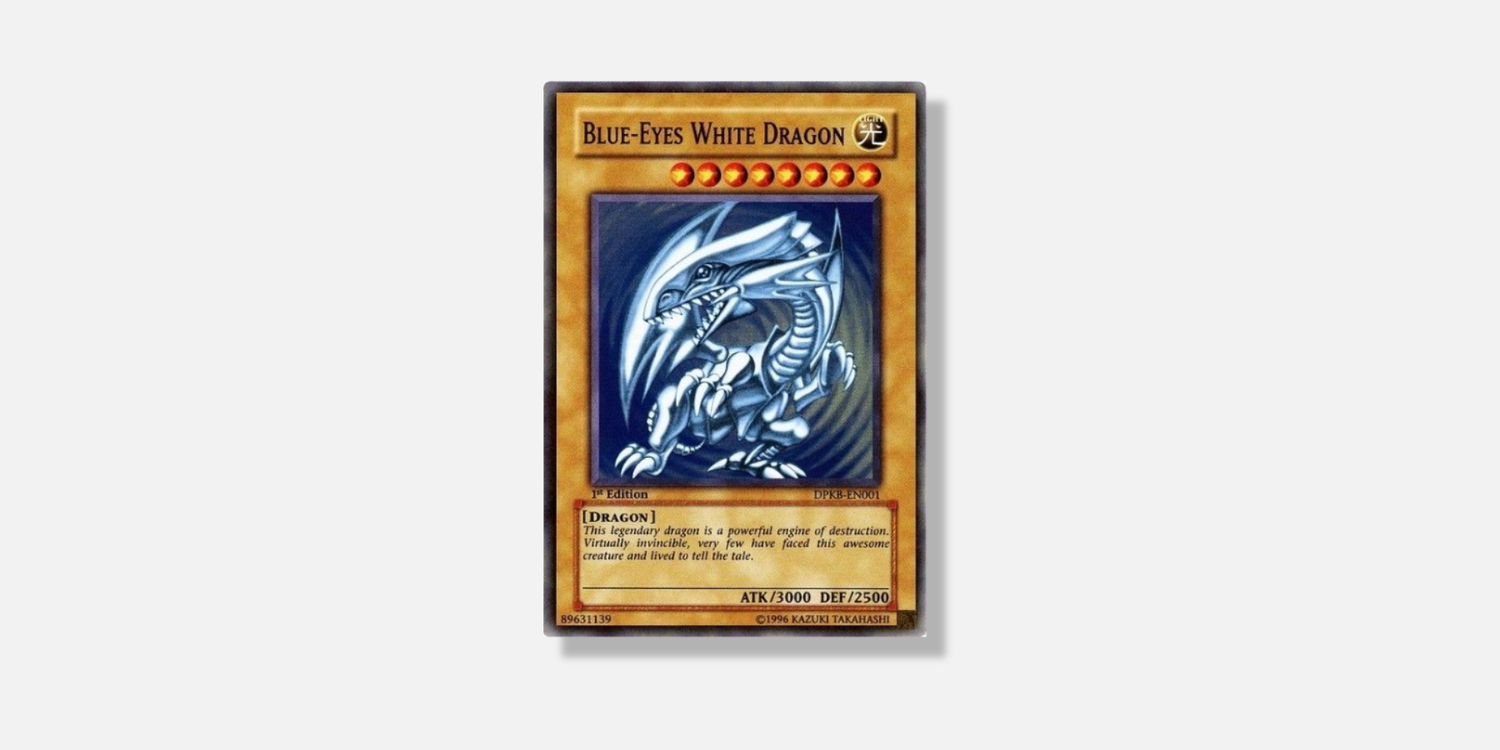
Blue-Eyes White Dragon is arguably the most famous monster in all of Yu-Gi-Oh!—the embodiment of raw power, prestige, and Kaiba’s unrelenting pursuit of dominance. In-game, Blue-Eyes defined early Yu-Gi-Oh! as a benchmark for strength, boasting unmatched attack power at the time and later evolving into entire archetypes built around overwhelming force and fusion mechanics. This Jump Festa promotional version, released in 1999, captures Blue-Eyes at the height of the franchise’s cultural explosion in Japan. Distributed exclusively at a major fan event rather than through booster packs, it was never meant to be widely owned, immediately separating it from standard secret rare yugioh cards. While exact print numbers remain undisclosed, circulation was extremely limited, and condition scarcity has become the defining factor—high-grade examples are notoriously difficult to source. A PSA 9 copy sold through Heritage Auctions for approximately $15,000, establishing it as one of the most desirable early-era promotional pieces on the market. Among collectors in 2026, this card represents the perfect convergence of nostalgia, documentation, and exclusivity: a time-stamped artifact from Yu-Gi-Oh!’s golden age and a cornerstone entry on any serious rare yugioh cards list.
Vintage and Early-Print Yugioh Rarities
Cyber-Stein (SJC-EN001) – 2004

Cyber-Stein is one of those cards that perfectly bridges Yu-Gi-Oh!’s player and collector worlds. As a character, it embodies the game’s early fascination with high-risk, high-reward mechanics—a twisted machine monster whose entire identity revolves around sacrificing life points for overwhelming power. In gameplay, Cyber-Stein was infamous: by paying a massive chunk of LP, players could cheat out any Fusion Monster in the game, a mechanic so explosive it reshaped competitive play and ultimately earned the card a long-standing spot on the banned yugioh cards list. This prize version, released in 2004, marks a turning point in Yu-Gi-Oh! history as the first-ever Shonen Jump Championship prize card, awarded at GenCon SoCal to top competitive performers. Unlike later trophies that leaned heavily into prestige aesthetics, Cyber-Stein’s importance is rooted in what it represented to players at the time—the dawn of the “pro” era, when winning tournaments meant earning cards no one else could legally obtain. Estimated to exist in roughly 126–150 copies, including special Upper Deck Day distributions, it remains scarce enough to command serious respect while still being visible enough to define a market. While recent public auction appearances are limited, Cyber-Stein consistently anchors discussions around rare yugioh cards worth money, not just because of scarcity, but because it represents the exact moment Yu-Gi-Oh! competitive play matured into something global, structured, and collectible. For many veteran duelists turned collectors, this card isn’t just a trophy—it’s the origin story of the Western high-end Yu-Gi-Oh! market.
Ulevo – 2004

Ulevo is one of those Yu-Gi-Oh! cards that instantly signals you’ve stepped beyond normal collecting territory. As a character, Ulevo feels almost like a prototype—an imposing fantasy creature designed not for decks, but to symbolize achievement at the highest level of play. Unlike iconic monsters tied to anime protagonists, Ulevo exists purely because of competition, making it deeply rooted in the player side of the game. Released in 2004 as part of the World Championship prize trio (alongside Meteo and Sengenjin), this card was awarded only to the very top competitors in the world, with just two confirmed copies known to exist. From a gameplay perspective, Ulevo was never intended to shape the meta; its “power” lies in what it represents rather than what it does on the field—a tangible reward for mastering the game at its highest level. In collector terms, this level of scarcity shifts the mindset entirely: there is no real market, no reliable price history, and virtually no public auction record. Ownership becomes a matter of knowing who holds the card rather than what it’s worth. Among veteran players turned collectors, Ulevo is often viewed less as a card and more as a relic of competitive Yu-Gi-Oh!’s early global era—a piece that reminds us when winning the game didn’t just earn titles, but created legends.
Tyler the Great Warrior – 2005

Tyler the Great Warrior is unlike any other Yu-Gi-Oh! card ever created, not because of its stats or competitive impact, but because of the human story it carries. Designed through the Make-A-Wish Foundation for Tyler Gressle, a young duelist battling a rare and life-threatening illness, this card represents courage, perseverance, and the heart of the game in a way no trophy ever could. Concept art was personally contributed by Kazuki Takahashi, with Tyler’s vision drawing inspiration from powerful anime warriors, resulting in a monster that feels heroic, resolute, and symbolic rather than meta-defining. In gameplay terms, Tyler the Great Warrior is modest and was never intended to shape competitive play; its true “power” lies in what it represents to players—a reminder that Yu-Gi-Oh! is ultimately about connection, imagination, and community. Released in 2005 as a true one-of-one, it was never printed, reissued, or included in any set, making it officially recognized as a singular card within the TCG. For years, it existed as a near-myth among collectors, discussed in forums and lists but unseen by the public, which only amplified its legend. When the card finally surfaced publicly decades later, it instantly became one of the most emotionally significant and rare yugioh cards ever acknowledged, transcending typical market logic. Among collectors and players alike, Tyler the Great Warrior isn’t just a grail—it’s a testament to why Yu-Gi-Oh! means so much to so many people, even outside the duel.

Promotional and Event-Exclusive Yugioh Cards
The Seal of Orichalcos (UDE Promo) – 2005

The Seal of Orichalcos occupies a uniquely dark corner of Yu-Gi-Oh! history, where anime lore, real-world mystery, and collector obsession collide. In the Waking the Dragons arc, the card was infamous for its soul-stealing effect and overwhelming battlefield presence, instantly branding it as one of the most ominous and powerful yugioh cards ever depicted. In gameplay terms, its real-world counterpart didn’t officially exist at the time—at least not for players. Instead, in 2005, Upper Deck quietly produced a small number of “legal-looking” Seal of Orichalcos cards exclusively for internal use during special convention events, where employees played the role of villain opponents in staged Boss Duels. These cards were never intended to leave company control, never sanctioned for tournament play, and never publicly announced, which only fueled their mystique when a handful surfaced years later. Estimated to number fewer than 15–20 copies, this promo became the ultimate forbidden fruit among collectors—an artifact that blurred the line between fiction and reality. For players, it represented the thrill of facing an unbeatable anime-level threat; for collectors, it became one of the most tantalizing rare yugioh cards worth money due to its secretive origin and unclear distribution trail. Even today, the Seal of Orichalcos UDE promo stands as a reminder that some of the most compelling collectibles aren’t defined by stats or legality, but by the stories of how they were never meant to exist at all.

Crush Card Virus (SJC-EN004) – 2007

Crush Card Virus is one of those rare Yu-Gi-Oh! cards where anime myth, competitive terror, and collector prestige all align perfectly. As a card, it became legendary through Seto Kaiba’s ruthless use of it in the anime, where it functioned as a deck-destroying weapon that felt downright unfair—and in real competitive play, that reputation wasn’t exaggerated. At its peak, Crush Card Virus was one of the most powerful yugioh cards ever printed, capable of dismantling an opponent’s strategy before they could even respond, which is why it quickly became format-defining and later heavily restricted. This SJC Ultra Rare prize version, released in 2007, was awarded exclusively to winners and top finishers at Shonen Jump Championships during the golden era of Western competitive play. While the card has since seen numerous low-rarity reprints, this original trophy printing exists in an entirely different tier, with estimates placing total copies between 40 and 60. For players, owning this card once meant holding an actual competitive advantage; for collectors in 2026, it represents the apex of mid-2000s Yu-Gi-Oh! prestige. Public auction appearances are scarce, but when authentic SJC copies surface, they’re instantly recognized as cornerstone pieces among valuable yugioh cards—not just for what they do, but for what they symbolized: absolute control, both on the field and in the collector hierarchy.
Gold Sarcophagus (German Trophy Prize) – 2007

Gold Sarcophagus is one of those rare Yu-Gi-Oh! cards that instantly looks important, even to someone outside the hobby. As a card, it introduced a deceptively simple but incredibly powerful effect—temporarily banishing a card from your deck only to retrieve it later—which would go on to become a staple mechanic in countless strategies. In gameplay, it symbolized delayed inevitability: once activated, the duel felt like it was ticking on your terms. This tournament prize version, released in 2007, elevated that utility into pure prestige. Awarded through region-specific circuits such as Pharaoh’s Tour events, it was never mass-produced and often tied to specific languages or regions, adding another layer of scarcity for collectors. The German-language trophy version, in particular, has become one of the most sought-after examples due to its limited distribution and unmistakable presentation. Unlike many trophy cards that feel abstract or prototype-like, Gold Sarcophagus still looks unmistakably like a reward, radiating ceremonial importance. Documented Heritage Auctions sales exceeding $12,000 have firmly established its place among the most desirable prize cards of the era. For players turned collectors, Gold Sarcophagus represents the perfect balance between functional game design and high-end collectible status—a card that was powerful, iconic, and unmistakably special the moment it entered circulation.
Rainbow Dragon (Misprint Variants) – 2007

Rainbow Dragon has always been a spectacle card—an over-the-top, prismatic embodiment of the Crystal Beast archetype and a symbol of excess power and visual flair in mid-2000s Yu-Gi-Oh!. In gameplay, it represented a high-investment, high-reward boss monster, requiring significant setup but delivering overwhelming presence once summoned, making it instantly memorable to players even if it wasn’t consistently meta-dominant. Where Rainbow Dragon truly enters collector legend, however, is through its misprint and production error variants. These anomalies—ranging from foil layer inconsistencies and name alignment errors to subtle ghost-rare–style defects—were never intentional, never documented in official print runs, and often surfaced through sharp-eyed players rather than distributors. Released in 2007, these error copies exist in a gray zone where scarcity is measured not by set numbers, but by grading populations and known examples tracked within specialist circles. In early 2026, Rainbow Dragon misprints began appearing as highlighted lots in curated, high-end collector environments, with estimates reaching into the $1,000–$1,500 range, signaling growing recognition of error cards as legitimate collectibles. For players, these cards feel like glitches in the matrix; for collectors, they represent connoisseurship—pieces valued not for nostalgia alone, but for knowledge, provenance, and the thrill of owning something the factory never meant to release. Among serious hobbyists, Rainbow Dragon misprints are quiet grails that rarely hit public marketplaces, trading hands discreetly among those who know exactly what they’re looking at.
How to Protect Your Rare Yugioh Card Collection
When you’re dealing with rare yugioh cards, protection isn’t just about avoiding accidents—it’s about preventing slow, invisible damage that kills value over time. Micro-scratches from cheap sleeves, pressure from overcrowded storage, UV exposure fading foils, humidity warping slabs, or loose cards shifting during transport are the real enemies of collectibles. For valuable yugioh cards, especially trophy cards, promos, and high-grade slabs, even minor wear can mean a massive hit to long-term worth. Serious collectors don’t treat protection as an afterthought—it’s part of the collection strategy.
Vaulted Collector-Grade Protection Recommendations
For collectors managing high-value cards, Vaulted focuses on secure storage, safe transport, and premium display, without compromising aesthetics.
Vaulted Card Case (2, 3, and 4-Row Options)
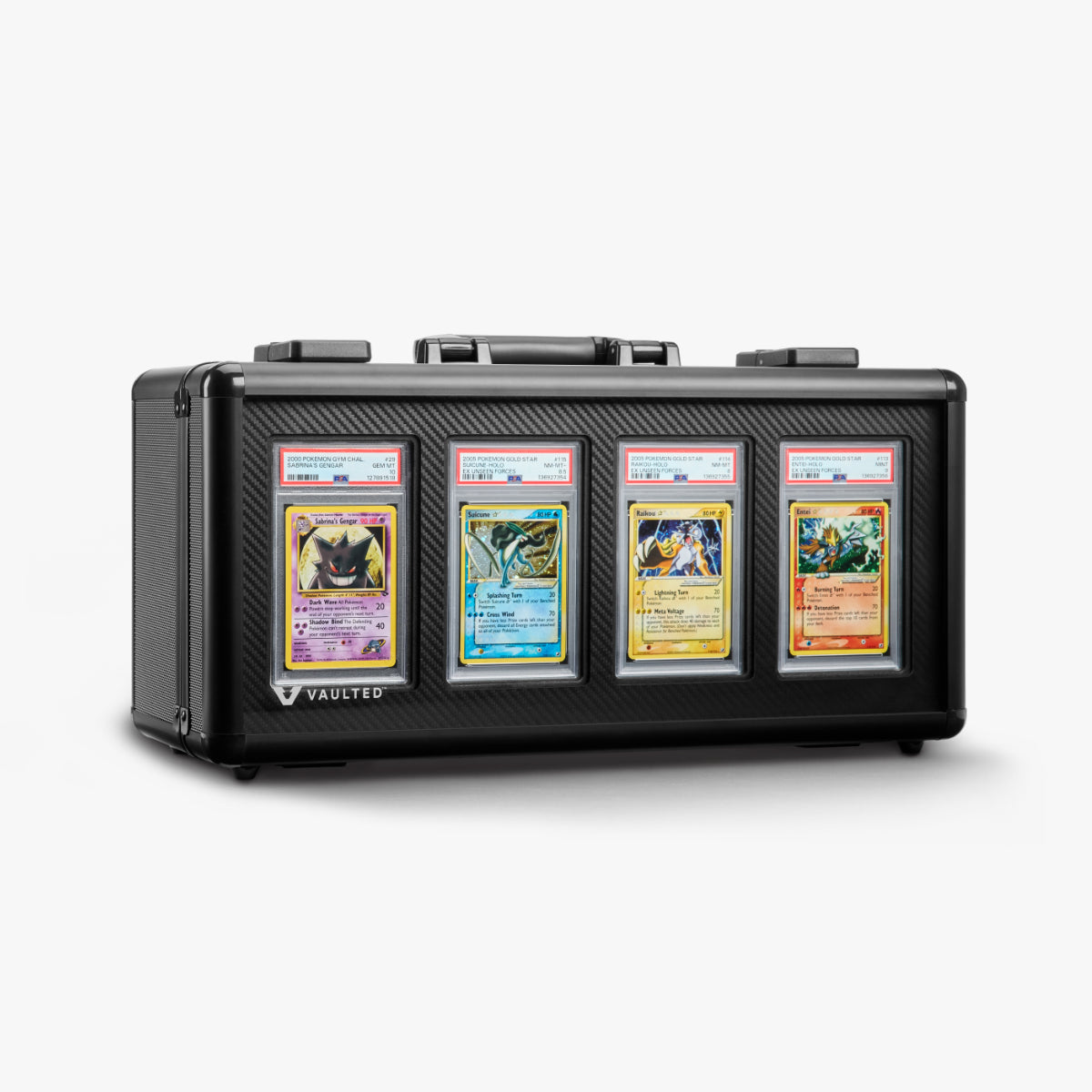
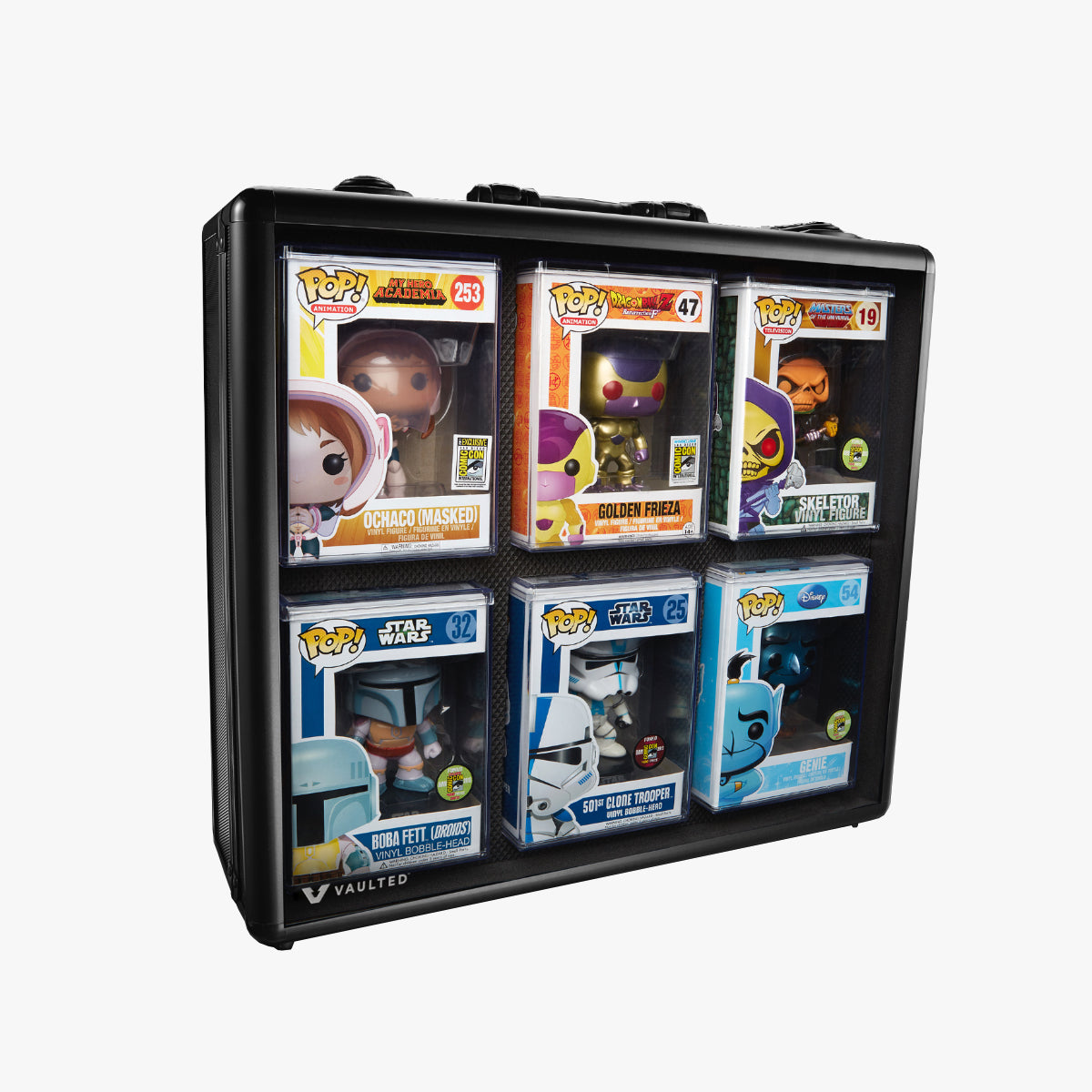
The Vaulted Card Case is designed for collectors who need serious protection with real flexibility. Its rigid aluminum shell and dense, collector-grade EVA foam keep slabs locked in place, preventing movement, edge wear, and impact damage during storage or travel. The clear display window lets you show off key pieces without exposing them to handling, while the Friction Fit™ interior ensures everything stays stable—even when fully loaded. With multiple row configurations available, this case scales easily from focused grail collections to larger portfolios of graded cards. It’s the kind of solution that makes sense when your collection includes cards you wouldn’t trust to a backpack or soft case.
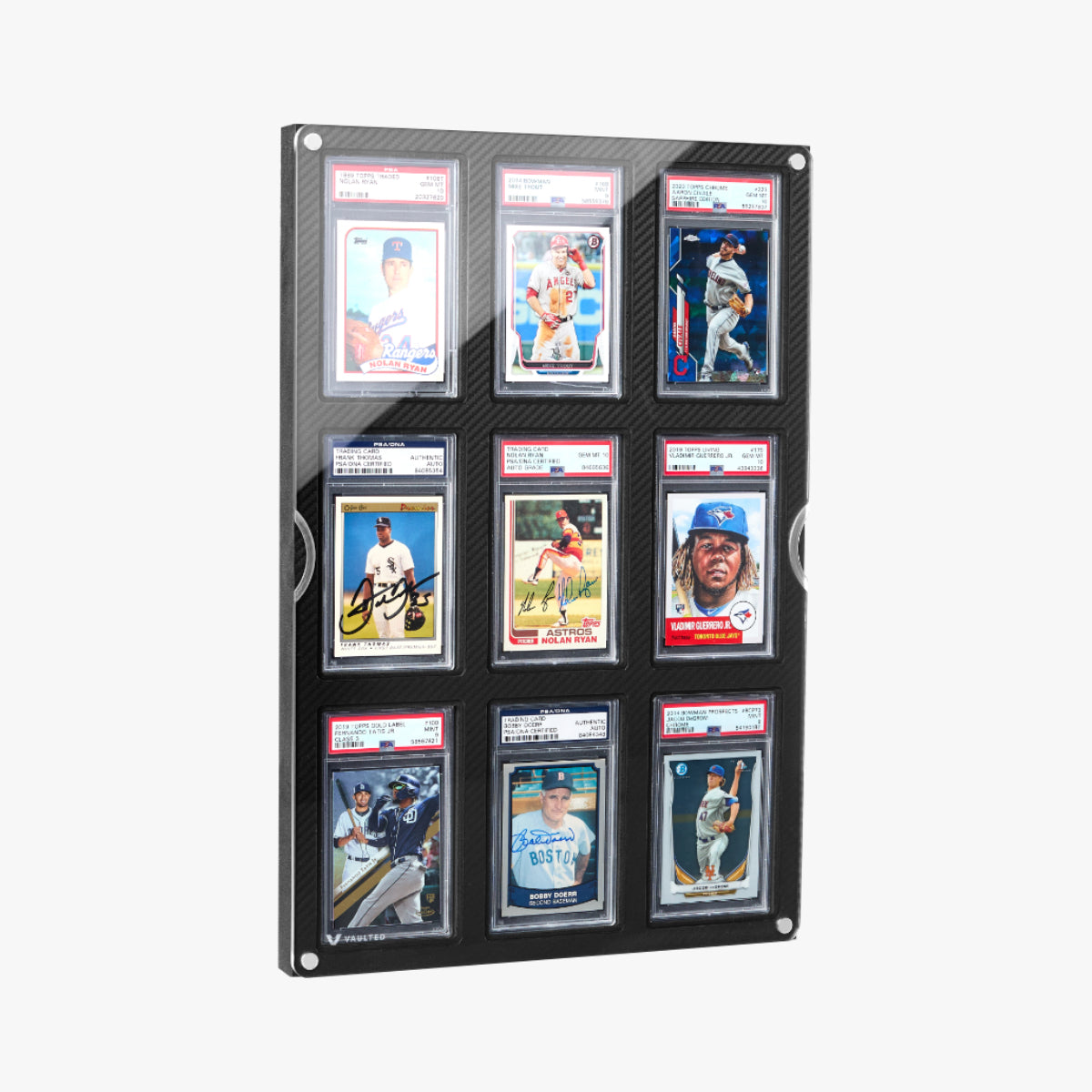
Vaulted Card Display (Wall-Mountable Slab Display)
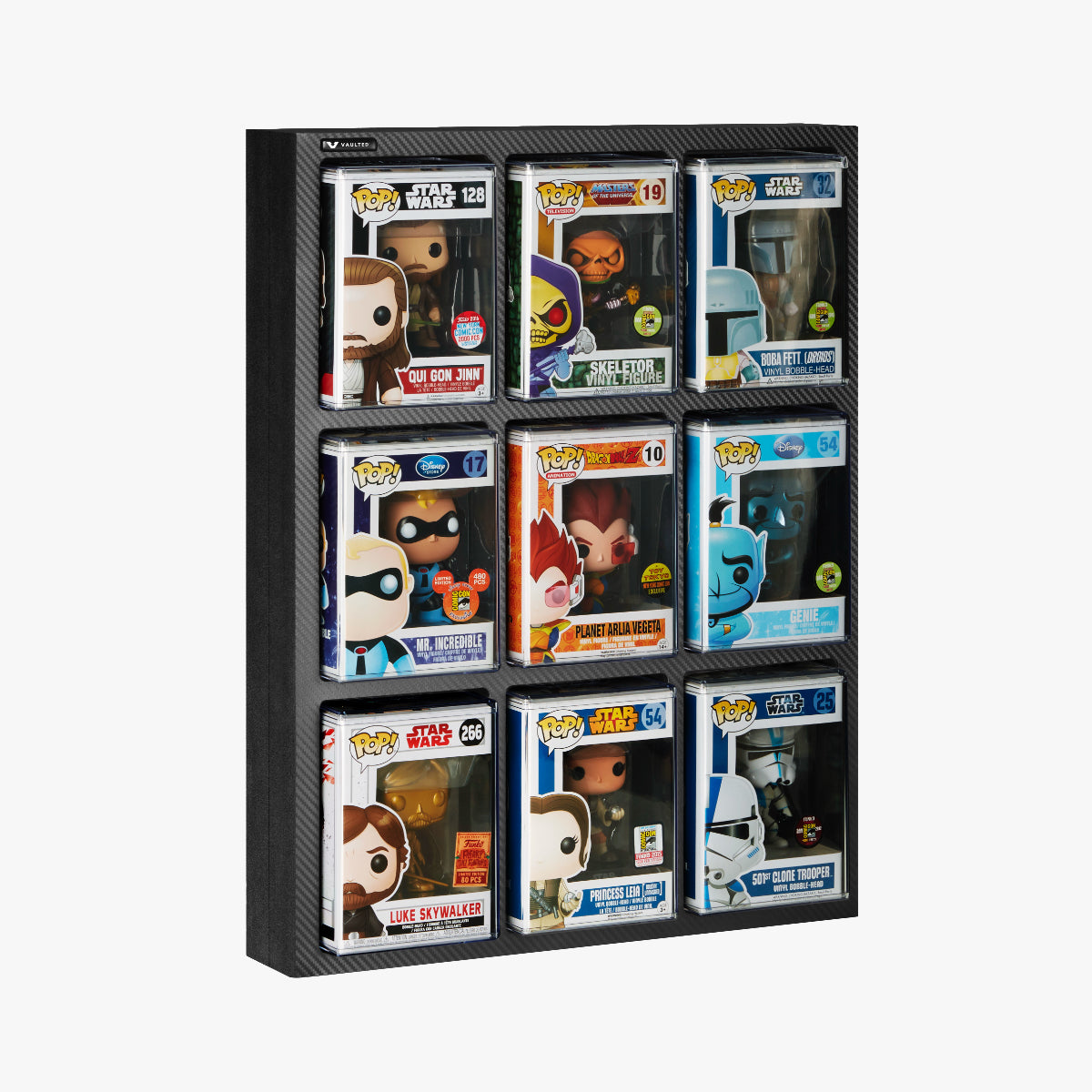
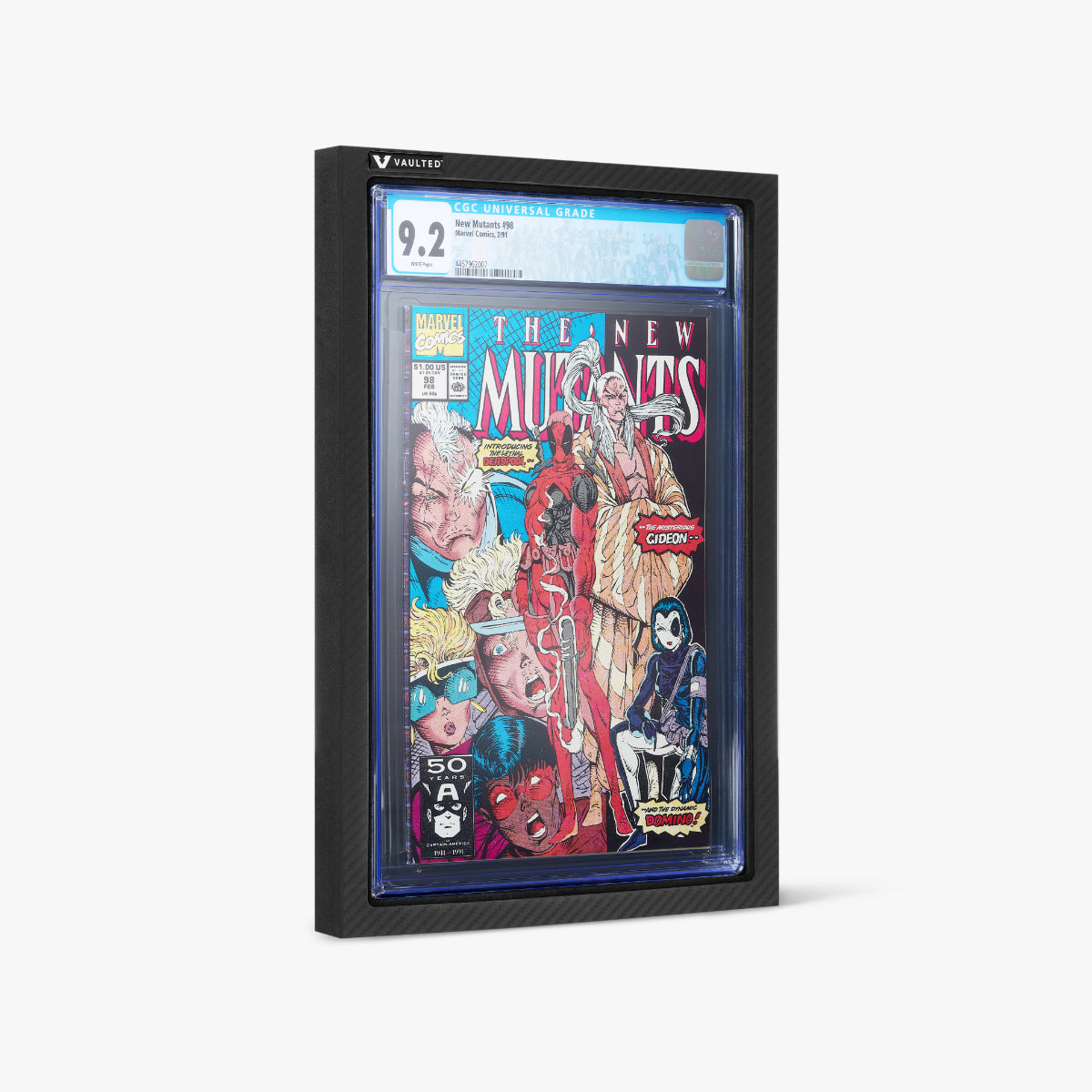
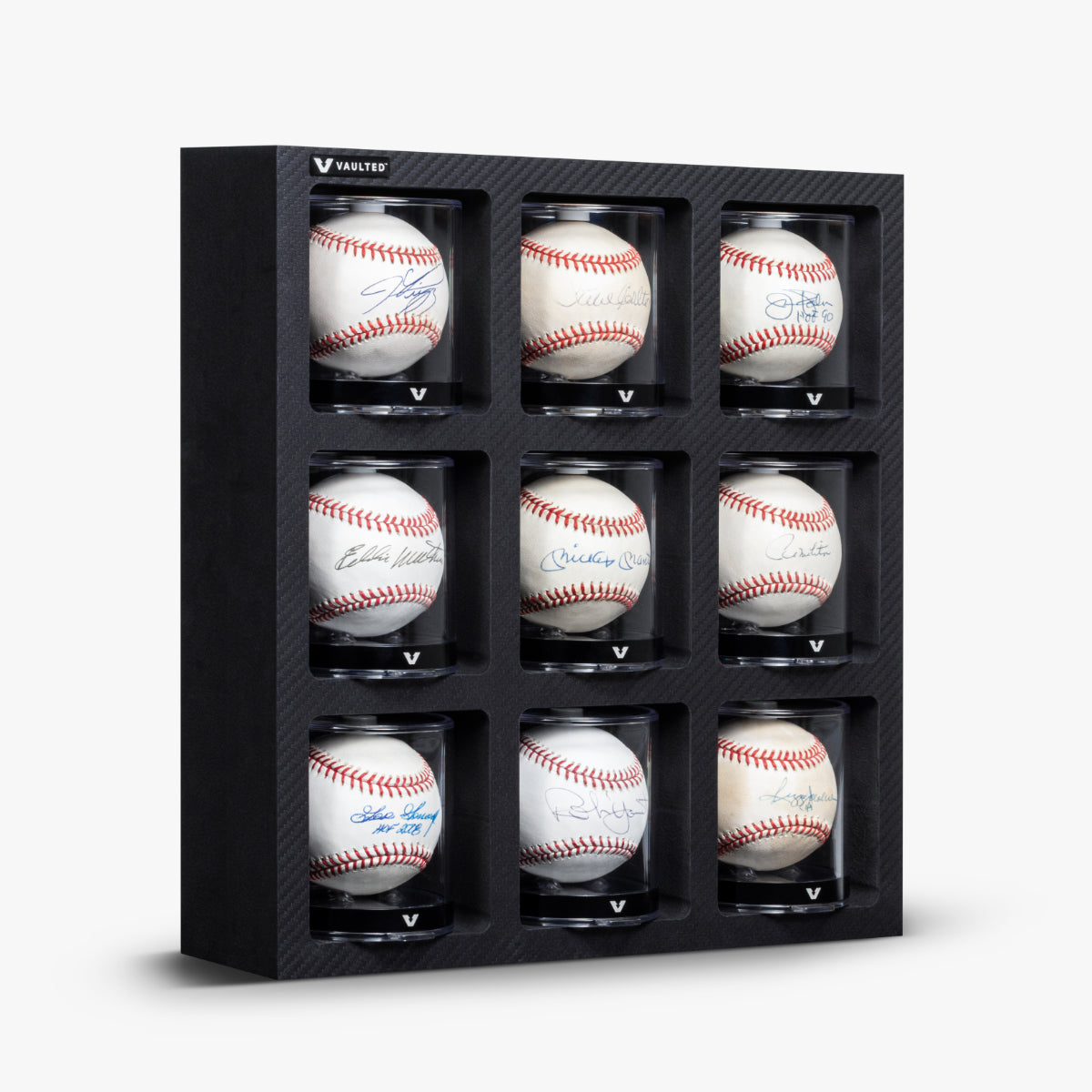
For collectors who want to showcase legendary yugioh cards without risking damage, the Vaulted Card Display turns slabs into art. Built from high-density EVA foam with a carbon-fiber finish, it securely holds graded cards in place while remaining ultra-lightweight and easy to mount. Whether you’re displaying PSA, CGC, SGC, BGS, or MAG slabs, this display offers a clean, gallery-style presentation that protects cards from scratches and unnecessary handling. It’s ideal for highlighting centerpiece cards while keeping them safe and visually striking.

Conclusion – Why Rare Yugioh Cards Matter More Than Ever in 2026
Yu-Gi-Oh! is no longer just a card game—it’s one of the most influential collectible ecosystems in the world. With tens of millions of active and former players globally, officially recognized competitive circuits across multiple continents, and over 25 years of continuous releases, the franchise has matured into a true pillar of modern collecting. Few hobbies can claim the same blend of nostalgia, competitive legitimacy, and cultural staying power that yugioh cards offer.
What makes rare yugioh cards especially compelling in 2026 is how clearly the collector market has defined its top tier. Trophy cards, early OCG artifacts, and historically significant promos are no longer viewed as curiosities—they’re recognized as cornerstones of the broader collectibles world, sitting comfortably alongside vintage Pokémon, Magic: The Gathering Alpha cards, and even non-TCG memorabilia. Auction houses, grading companies, and private collectors now treat these pieces as long-term assets, not short-term flips.
At the same time, the player base continues to refresh itself. New yugioh cards bring new fans into the game every year, while longtime duelists age into collectors, rediscovering original yugioh cards, og yugioh cards, and the legends they grew up with. This constant cycle—players becoming collectors—keeps demand alive in a way few franchises can replicate. It’s why discussions around yugioh cards worth money, valuable yugioh cards, and even questions like how many yugioh cards are there continue to grow, not fade.
Ultimately, collecting at the high end isn’t just about ownership—it’s about stewardship. The most respected collections aren’t defined solely by what’s inside them, but by how those pieces are preserved, documented, and protected. As Yu-Gi-Oh! continues to cement its place in global collector culture, those who treat their cards with intention today are the ones preserving the history of the game for tomorrow.
Whether you’re curating a focused grail lineup or managing a broader yugioh cards list, one thing is clear: Yu-Gi-Oh! has earned its seat at the collector table—and it’s not leaving anytime soon.

Frequently Asked Questions About Rare Yugioh Cards
What are Yu-Gi-Oh! cards?
Yu-Gi-Oh! cards are collectible trading cards used in a competitive strategy game based on the Yu-Gi-Oh! manga and anime franchise. Players build decks using monster, spell, and trap cards to duel opponents under a defined rule set. Beyond gameplay, yugioh cards have evolved into a major collectibles market, with certain cards valued for their rarity, history, artwork, and cultural importance rather than playability. Today, the hobby includes everything from casual play and new yugioh cards to high-end collecting focused on legendary yugioh cards, trophy cards, and other rare, investment-grade pieces.
What Yu-Gi-Oh! cards are worth money?
Yu-Gi-Oh! cards worth money generally fall into a few key categories: tournament prize cards, early promotional cards, limited event exclusives, and high-grade vintage prints. The most valuable examples are often trophy cards awarded to tournament winners, cards with extremely low print runs, or unique one-of-a-kind releases. Condition plays a major role—graded copies in top condition can be worth exponentially more than ungraded or worn versions. While some secret rare yugioh cards and ultra rare yugioh cards from standard sets can hold value, the highest prices are usually reserved for historically significant or officially limited releases rather than modern mass-produced cards.
When did Yu-Gi-Oh! cards come out?
Yu-Gi-Oh! cards first appeared in Japan in 1996, originally as promotional items tied to the manga. These early releases—often referred to as rare yugioh cards 1996 or original yugioh cards—were not widely distributed and are among the most sought-after pieces today. The trading card game expanded formally in Japan in 1999 and later launched internationally in the early 2000s. Because of their age and limited availability, early OCG-era cards play a major role in discussions about most rare yugioh cards and long-term collector value.