
The Collector's Guide to Choosing a Baseball Display Case That Protects Your Signed Collection
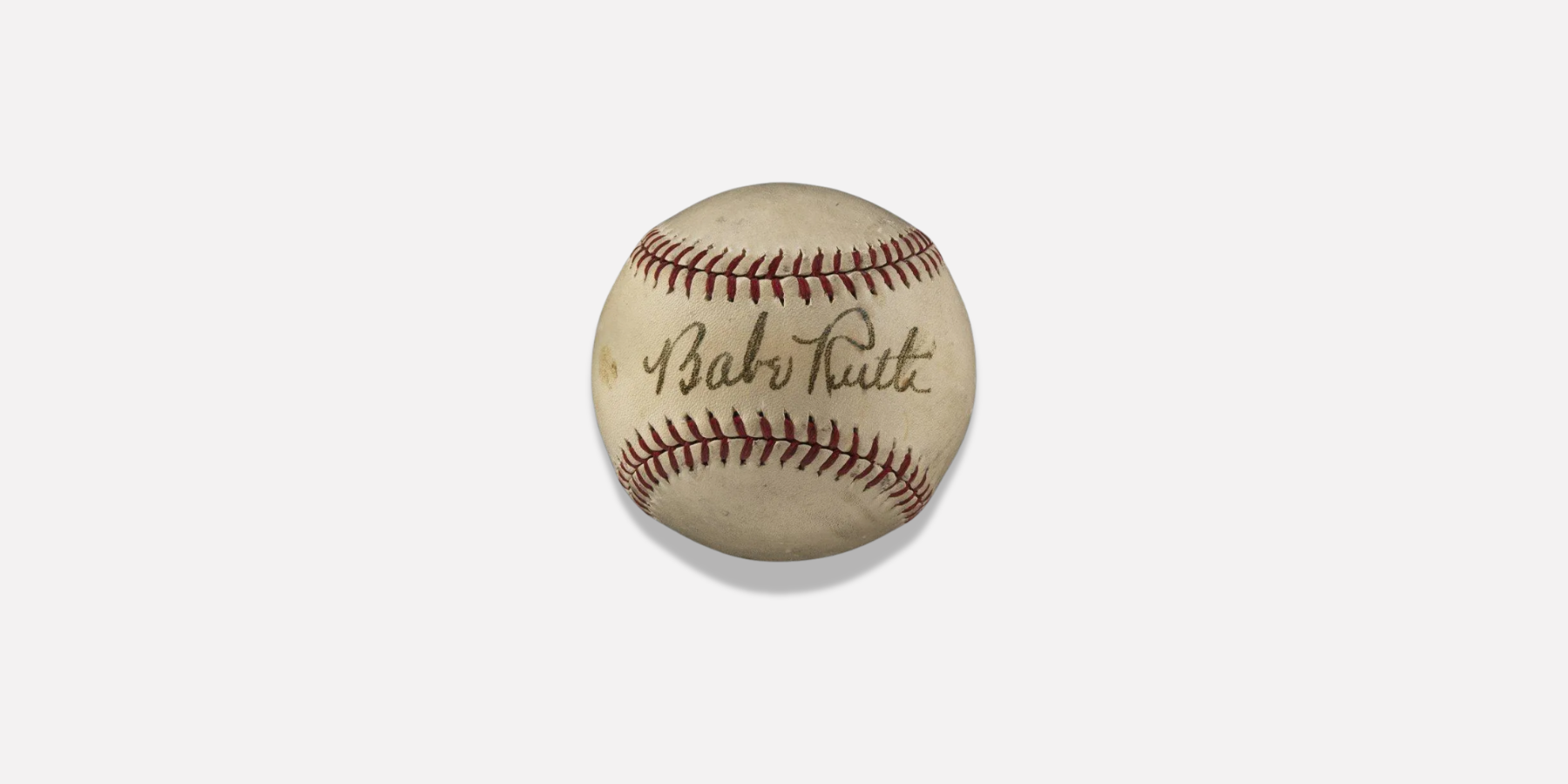
In December 2022, a single baseball signed by Babe Ruth sold for $183,500 at Heritage Auctions. A Mickey Mantle signed baseball in pristine condition routinely trades between $2,000 and $5,000 on the authenticated market, according to PSA's price guide. These are not just sports souvenirs. They are tangible pieces of American history, and for many collectors, they represent serious financial investments.

Yet every year, collectors unknowingly destroy thousands of dollars in autograph value through improper display and storage. Faded signatures, yellowed leather, cracked surfaces: all of these are preventable. The difference between a signed baseball that holds its value for decades and one that deteriorates in a few years often comes down to a single decision, choosing the right display case.
This guide covers everything you need to know about protecting your signed baseballs, from the science behind autograph degradation to choosing the right baseball display case for your collection.
Why Signed Baseballs Are Worth Protecting

The sports memorabilia market is not a niche hobby anymore. According to a 2023 report by the Sports Collectors Association, the global sports memorabilia market is valued at over $26 billion, with baseball memorabilia representing the largest single-sport category. Signed baseballs sit at the heart of that market because they are accessible, displayable, and deeply personal. A signed baseball connects a collector to a specific player, a specific era, and often a specific moment in the game's history.
But that value is fragile. It depends almost entirely on two things: authentication and condition. You can control both, but only if you understand what threatens them.
What Makes a Signed Baseball Valuable
Professional appraisers and authentication services like PSA, JSA (James Spence Authentication), and Beckett evaluate signed baseballs based on several key factors.
The identity of the signer matters most. Hall of Famers and historically significant players command the highest premiums. A Jackie Robinson single-signed baseball (Robinson passed away in 1972, making his signatures finite) has sold for over $75,000 at Heritage Auctions. Active stars like Shohei Ohtani already command $500 to $1,500 per authenticated signature, according to Beckett's 2024 pricing data.
Authentication is the second major value driver. Baseballs verified by PSA, JSA, or Beckett consistently sell for two to five times more than unauthenticated examples. Without a certificate of authenticity from a recognized service, even a genuine signature carries significant doubt in the market.
Then there is the condition of the signature itself. Ink clarity, placement on the ball (the "sweet spot" between the seams is the most desirable location), and any signs of fading or smearing all affect the grade. A bold, clean signature on the sweet spot will always outperform a faded autograph placed awkwardly on a side panel.
Finally, the condition of the baseball matters. Rawlings has been the official baseball supplier for Major League Baseball since 1977. A clean, white Rawlings Official Major League Baseball in excellent condition will grade higher than a yellowed, scuffed, or stained ball, regardless of whose name is on it.
The Most Valuable Signed Baseballs Ever Sold
To put the stakes in perspective, here are some of the most significant signed baseball sales on public record:
|
Player |
Description |
Sale Price |
Auction House |
Year |
|
Babe Ruth |
Single-signed baseball |
$183,500 |
Heritage Auctions |
2022 |
|
Jackie Robinson |
Single-signed baseball |
$75,640 |
Heritage Auctions |
2017 |
|
Hank Aaron |
755th HR signed ball |
$65,725 |
2021 |
|
|
Mickey Mantle |
Single-signed, PSA 9 |
$63,000 |
Robert Edward Auctions |
2021 |
|
Ted Williams |
Single-signed, PSA 10 |
$57,600 |
Hunt Auctions |
2020 |
These are not outliers reserved for the ultra-wealthy. They represent the ceiling of a market where even mid-tier signed baseballs from retired stars regularly sell for $200 to $2,000. The point is simple: if your signed baseball is worth anything at all, it is worth protecting.
The 4 Enemies of Autographed Baseballs
Every signed baseball faces four threats that, left unchecked, will degrade its value over time. Understanding these threats is the first step toward preventing them.
UV Light: The Silent Signature Killer
Ultraviolet radiation is the single greatest threat to a signed baseball on display. UV light breaks down ink pigments at the molecular level, causing signatures to fade gradually and irreversibly. According to the Smithsonian Institution's preservation guidelines, UV exposure above 75 microwatts per lumen causes measurable fading in organic inks within 6 to 12 months.
Most autographs on baseballs are signed with ballpoint pens or Sharpie markers, both of which use ink formulations that are particularly vulnerable to UV degradation. A signed baseball displayed on a sunny shelf or near a window without UV-filtering protection can lose 30 to 50 percent of its ink contrast within two to three years. That kind of fading can drop a PSA signature grade by several points, cutting the ball's market value in half or worse.
The solution is straightforward: any baseball display case used for a signed ball must include UV-filtering acrylic. Standard glass and unfiltered plastic offer zero UV protection.
Humidity and Temperature Fluctuations
A baseball is made of cowhide leather wrapped around a cork-and-rubber core with wool windings. Leather is hygroscopic, meaning it absorbs and releases moisture from the surrounding air. When humidity fluctuates, the leather expands and contracts repeatedly, eventually causing cracking, warping, and surface deterioration.
The Library of Congress recommends storing leather goods between 30 and 50 percent relative humidity at a stable temperature of 65 to 70 degrees Fahrenheit. Baseballs stored in uncontrolled environments like garages, attics, or basements are exposed to wide swings in both temperature and humidity throughout the year. The result is yellowing leather, mildew spotting in humid climates, and brittle cracking in dry ones. All of these are irreversible.
Dust, Oils, and Physical Handling
Every time a collector picks up a signed baseball without wearing cotton gloves, they transfer natural skin oils onto the leather surface. These oils are invisible at first, but over time they attract dust particles that bond to the surface and settle into the ink of the signature. The result is a grimy, darkened autograph that no amount of careful cleaning can fully restore without risking further damage.
Even in a seemingly clean room, airborne dust settles continuously. A baseball left on an open stand will accumulate a fine layer of particulate matter within weeks. Over months and years, that dust works its way into the stitching and across the signature, creating a dull, aged appearance that directly affects the ball's grade and value.
Poor Display Materials: PVC, Untreated Plastic, and Cardboard
Not all baseball cases are created equal. Many inexpensive display holders sold online are made from PVC (polyvinyl chloride) or polystyrene, both of which release acidic compounds through a process called outgassing. The American Institute for Conservation has warned against prolonged contact between PVC plastics and collectibles, as these compounds accelerate yellowing and can chemically interact with ink.
Cardboard boxes and felt-lined cases can also be problematic if the materials are not acid-free. Over time, the acids in standard cardboard migrate to the surface of the baseball, causing discoloration that is often mistaken for age-related wear.
Museum-grade acrylic, specifically polymethyl methacrylate (PMMA), is the gold standard for display cases. It is chemically inert, optically clear, lightweight, shatter-resistant, and available with UV-filtering additives built directly into the material.
How to Choose the Right Baseball Display Case

With the threats understood, the next step is selecting a display case that actually addresses all four of them. This section breaks down the options available to collectors today.
Acrylic Baseball Display Case vs. Glass vs. Plastic
The three most common materials used in baseball display cases are acrylic (PMMA), glass, and cheap plastic (PVC or polystyrene). The differences between them matter more than most collectors realize.
Museum-grade acrylic with UV filtering is the top choice for serious collectors. It blocks 98 percent or more of UV radiation, weighs significantly less than glass, is highly shatter-resistant, and does not outgas any harmful compounds. Optical clarity is excellent, often matching or exceeding glass. Price typically ranges from $15 to $50 per ball depending on the brand and features.
Glass cases offer excellent optical clarity and no outgassing risk, but they provide zero UV protection unless a separate UV-filtering film is applied. They are also heavy and fragile, making them impractical for shelf displays and risky during handling or transport. Prices range from $20 to $60 per ball.
Cheap plastic cases made from PVC or polystyrene are the most affordable option at $3 to $10 per ball, but they come with significant downsides. No UV protection, a high risk of outgassing, and a tendency to yellow over time make them unsuitable for any baseball with meaningful value. They are fine for unsigned practice balls or temporary storage, but they should never be used for autographed baseballs.
Baseball Cube vs. Baseball Stand vs. Baseball Shadow Box
Beyond material, collectors also need to choose a display format. The three most popular options are cubes (or capsules), stands, and shadow boxes.
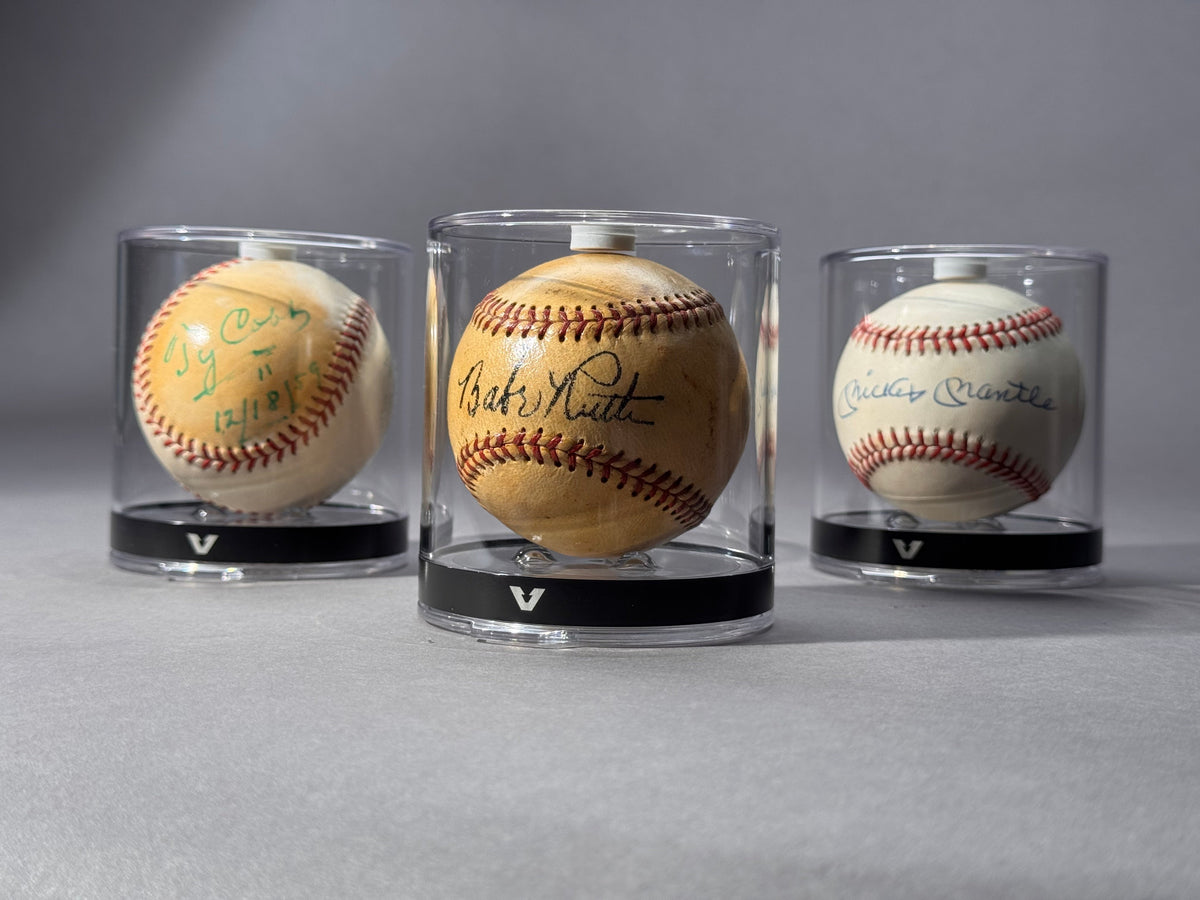
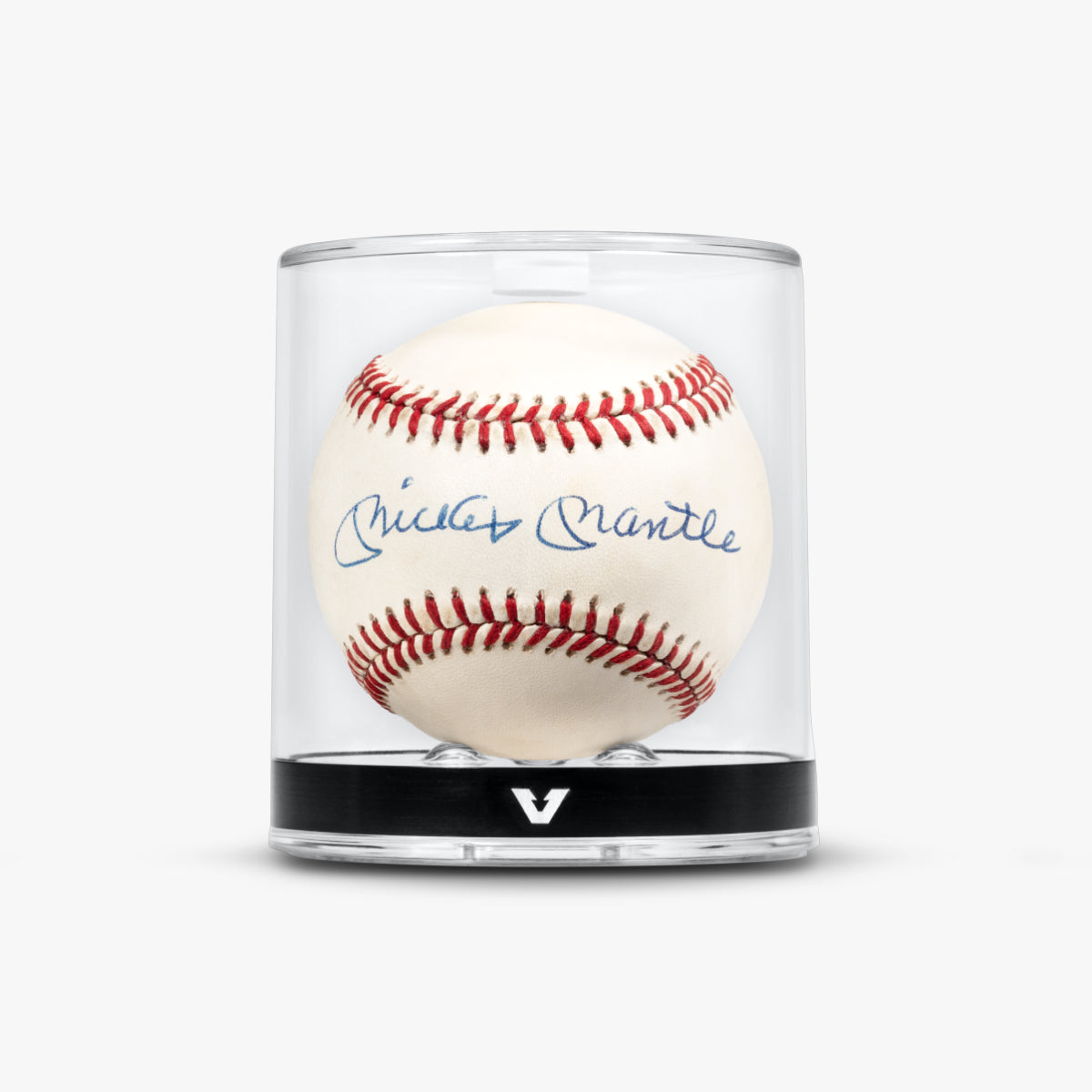
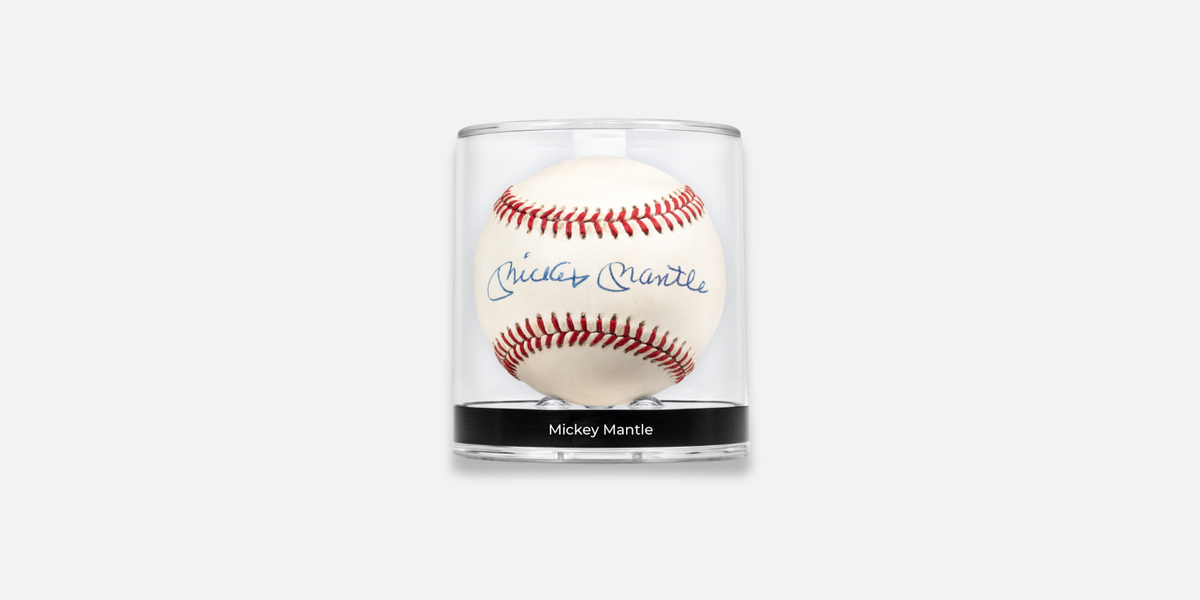
A baseball cube or capsule is the best option for individual ball display. It is fully enclosed on all sides, protecting the ball from dust, oils, UV light, and physical contact. This format is ideal for autographed baseball display cases that sit on shelves, desks, or inside cabinets. The Baseball Capsule by Vaulted, priced at $34.99 per unit or $249.99 for a 10-pack, is a purpose-built example. It uses museum-grade UV-filtering acrylic with crystal-clear optical clarity and a precision-fit cradle that holds the ball securely without applying pressure to the signature. The fully sealed design means zero dust infiltration and no direct contact with skin oils.
A baseball stand is an open-air display option, typically a small pedestal, ring, or angled holder that presents the ball on a desk or shelf. Stands look clean and minimal, but they offer zero protection from any of the four threats. Dust settles on the ball constantly, UV light hits the signature directly, and the ball is fully exposed to handling. Stands are acceptable for unsigned display balls or baseballs used as decor, but they are not suitable for anything with collectible value.
A baseball shadow box is a larger, wall-mounted display designed to hold a baseball alongside other memorabilia like ticket stubs, photographs, or trading cards. Shadow boxes are great for themed displays and storytelling pieces, but they are more expensive ($40 to $150+), require wall mounting hardware, and take up significantly more space. For collectors focused purely on protecting individual signed baseballs, a shadow box is often more than what is needed.
What to Look for in a UV-Protected Baseball Display Case
When evaluating any baseball display case for a signed ball, there are six features that matter most:
-
UV-filtering: a non-negotiable.
-
Acid-free interior: Any foam, felt, or fabric lining inside the case should be certified acid-free to prevent chemical interaction with the leather and ink over time.
-
Snug but pressure-free cradle: The signature side of the ball needs to be visible and untouched. A good cradle supports the ball from below without squeezing it or pressing against the ink.
-
Optical clarity: Look for cases with no distortion, tinting, or visible seams. The whole point of a display case is to showcase the ball. If the acrylic is cloudy or warped, it defeats the purpose.
-
Stackable or flexible display design: Cases that work equally well on a shelf, inside a cabinet, or on a desk give collectors more options as their collection grows.
-
Fully sealed enclosure: An enclosed case prevents dust accumulation, blocks airborne contaminants, and eliminates the temptation to handle the ball directly.
How to Store a Baseball Collection for Long-Term Preservation
Not every baseball in a collection needs to be on display at all times. For collectors with larger collections, having a smart approach to both display and storage is essential for long-term preservation.
Ideal Storage Conditions
The guidelines from the Library of Congress and the Smithsonian Institution provide a clear framework for storing leather collectibles like baseballs:
-
Temperature: 65 to 70 degrees Fahrenheit (18 to 21 degrees Celsius), stable throughout the year. Significant fluctuations, even within a single day, cause the leather to expand and contract in ways that accelerate aging.
-
Relative humidity: 30 to 50 percent. A simple digital hygrometer, available for under $15, can monitor this in any room. In humid climates, a dehumidifier may be necessary. In dry climates, a small humidifier in the storage area can prevent cracking.
-
Light exposure: Minimize as much as possible. For balls in display cases with UV-filtering acrylic or polycarbonate, ambient indoor lighting is acceptable. For stored baseballs not in UV-filtered cases, complete darkness is ideal.
-
Location: Interior rooms in climate-controlled spaces are best. Garages, attics, and basements are the worst possible choices due to temperature swings, humidity extremes, and increased exposure to pests and moisture.
Displaying vs. Storing: When to Use Each
A practical strategy for collectors with more than a handful of signed baseballs is to rotate what is on display. Choose your five to ten most prized pieces for active display in UV-protected acrylic baseball display cases, and store the rest in acid-free tissue paper inside acid-free archival boxes in a climate-controlled closet, office, or safe.
This rotation approach minimizes cumulative light exposure across the full collection while still letting you enjoy your best pieces. Every six months to a year, you can swap out which balls are on display and which are in storage. This keeps the collection fresh visually and distributes UV exposure more evenly.
The 10-Pack Strategy for Serious Collectors
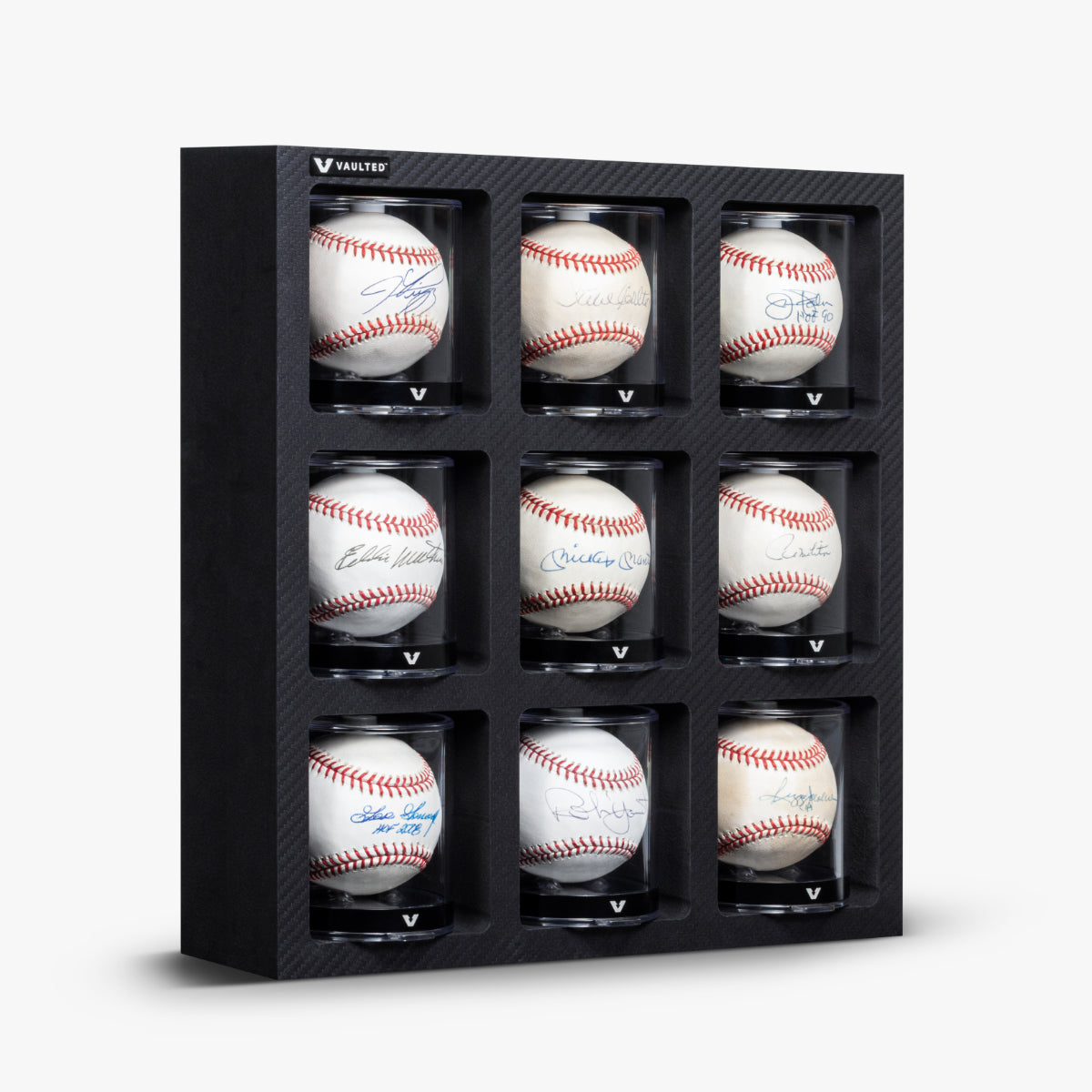
For collectors with ten or more signed baseballs, buying display cases individually adds up quickly. The Baseball Capsule 10-Pack at $249.99, effectively $25.00 per case compared to $34.99 individually, offers a 29 percent savings while standardizing your entire collection display with uniform, museum-grade protection.
Beyond cost savings, there is a visual benefit to uniformity. A shelf or cabinet lined with matching display capsules creates a clean, professional presentation that highlights the baseballs themselves rather than a mismatched assortment of cases. Collectors who display their pieces at home offices, man caves, or dedicated memorabilia rooms often find that a consistent display format dramatically elevates the look of the entire collection.
Real-World Examples: What Happens When You Don't Protect Signed Baseballs
Theory is useful, but real examples drive the point home. These scenarios, drawn from collector community experience and grading data, illustrate exactly what is at stake.
The Cost of UV Damage on a Mickey Mantle Signed Baseball
Consider a Mickey Mantle single-signed baseball originally graded PSA 8 on the signature, a strong grade that placed the ball's market value between $10,000 and $15,000 based on comparable auction results. The collector displayed it proudly in a standard glass case on a shelf near a south-facing window in his home office.
Five years later, the collector submitted the ball for re-grading. The signature had faded noticeably, dropping to a PSA 4. The ball's estimated market value fell to under $3,000, a loss of $7,000 to $12,000 in value. Five years of UV exposure through a window, filtered only by standard glass that blocks zero UV radiation, was all it took.
This is not a rare scenario. PSA and JSA graders report that signature fading from UV exposure is one of the most common reasons for downgraded re-submissions. It is also one of the most preventable.
Proper vs. Improper Storage Over 10 Years
Imagine two identical Rawlings Official Major League Baseballs, both signed by the same player on the same day with the same pen. One is placed inside a sealed, UV-filtering acrylic display case on a bookshelf in a climate-controlled living room. The other is placed on an open baseball stand on the same bookshelf.
After ten years, the differences are dramatic. The case-stored baseball retains its white leather color and the signature remains bold, dark, and clearly legible. The leather shows no yellowing, no spotting, and no visible wear. The ball looks almost identical to the day it was signed.
The open-displayed baseball tells a different story. The leather has yellowed noticeably, particularly on the side facing the room's ambient light. Dust has accumulated in the stitching grooves and across the surface of the signature, giving it a dull, faded appearance. The ink itself has lost contrast, not from direct sunlight, but from years of cumulative ambient UV exposure and dust bonding to the ink surface. If both balls were submitted for grading, the case-stored ball would grade several points higher on both the ball and signature scales.
The difference in these two outcomes came down to one choice: a sealed acrylic display case versus an open stand.
FAQs
How much does a baseball display case cost?
Baseball display cases range from $5 to over $150 depending on the material, quality, and format. Budget plastic cases made from PVC or polystyrene start around $3 to $10 but offer no UV protection and may damage collectibles through chemical outgassing. Museum-grade acrylic cases with UV filtering, like the Baseball Capsule by Vaulted, cost $34.99 per unit or $249.99 for a 10-pack ($25.00 per unit). High-end glass-and-wood display cases designed for multiple balls or shadow box presentations typically run $50 to $150 or more.
Do baseball display cases protect against UV damage?
Not all of them. Only display cases made with UV-filtering acrylic (PMMA with UV-inhibiting additives) block harmful ultraviolet radiation. Standard glass and cheap plastic cases offer zero UV protection unless a separate UV-filtering film is applied, which is rare in consumer-grade products. When shopping for an autographed baseball display case, look for manufacturer specifications confirming 98 percent or greater UV filtration. If the listing does not mention UV protection specifically, assume the case does not provide it.
What is the best way to display a signed baseball?
The best way to display a signed baseball is inside a fully enclosed, UV-filtering acrylic case placed in a climate-controlled room away from direct sunlight. The case should hold the ball in a cradle with the signature facing outward, without applying any pressure to the autograph. Avoid open stands, direct window light, and any case made from PVC or non-UV-filtering materials. For long-term preservation, keep the room between 65 and 70 degrees Fahrenheit with 30 to 50 percent relative humidity.
How should I store baseballs I am not displaying?
Store non-displayed baseballs individually wrapped in acid-free tissue paper inside acid-free archival storage boxes. Keep the boxes in a climate-controlled space at 65 to 70 degrees Fahrenheit and 30 to 50 percent relative humidity. Avoid rubber bands, plastic bags, and standard cardboard boxes, all of which can cause yellowing, moisture trapping, or chemical damage over time. For high-value pieces, consider a fireproof safe with climate control or a dedicated storage cabinet.
Are signed baseballs a good investment?
Signed baseballs from Hall of Famers and historically significant players have consistently appreciated in value over the past several decades. The sports memorabilia market surpassed $26 billion globally in 2023, according to the Sports Collectors Association, and authenticated signed baseballs remain one of the most liquid categories within that market. However, value depends heavily on three factors: authentication from a recognized service (PSA, JSA, or Beckett), the condition of the signature, and proper long-term preservation. A well-maintained, authenticated signed baseball from a legend like Babe Ruth or Mickey Mantle is considered a tangible alternative asset by many serious collectors. Conversely, a poorly stored ball with a faded signature, even from a legendary player, will lose significant value over time.
Protect What Your Collection Is Worth
A signed baseball is more than a collectible. It is a connection to the history of the game, a piece of a specific moment frozen in time. Whether you own a single autographed ball from your favorite player or a curated collection of Hall of Fame signatures, the way you display and store those baseballs determines whether their value grows or disappears.
The threats are real but entirely preventable. UV light, humidity, dust, and poor materials will degrade any baseball over time. A museum-grade, UV-filtering acrylic display case eliminates all four threats in one step.
The Baseball Capsule by Vaulted was designed specifically for this purpose: crystal-clear optical clarity, built-in UV protection, a sealed dust-proof enclosure, and a precision cradle that holds the ball without touching the signature. At $34.99 per case or $249.99 for a 10-pack, it is the most practical way to give your signed baseballs the protection they deserve.
Your collection tells a story. Make sure it is still worth reading in 20 years.